
I recently discovered FutureSearch.ai, a pretty cool AI Super-Forecaster tool. Read this essay by Scott Alexander to get more context on SuperForecasting; it’s super-fascinating. I also recommend Philip Tetlock’s book on the same topic.
FutureSearch is a very powerful (and also pretty expensive) AI-driven forecasting and research platform that utilizes a scaffolding approach – essentially engineering and architectural wrappers built around a variety of AI language models (LLMs) to improve their analytical and forecasting capabilities. Instead of relying on a single AI prompt, this “scaffold” breaks complex tasks into small subtasks, delegates research to autonomous agents, and synthesizes findings into a calibrated probability rating (see below). Founded by former leaders from Metaculus and Google, it seeks to predict the outcomes of complex real-world events, including geopolitics, technology trends, and business metrics. Wow.
So, I asked FutureSearch to predict how likely a deep rift or serious conflict (tradewars, sanctions etc) between the USA and the USofE (The United States of Europe – one of my fav memes:) would be, by 2030, fuelled by the already deeply disparate AI/AGI worldviews, Europe’s humanistic approach to exponential technologies, and the technocratic policies / politics, transhumanism and effective altruism that is already gaining quickly in the USA. This is a key topic in my work (as you may know:) and the results really got me thinking.
Ultimately, I think this isn’t just about America versus Europe. It is a contest – and soon, a fight – between two entirely different models of civilization: one where technology is an unstoppable engine forcing humanity to adapt (or to merge??) and one where technology remains a tool, firmly guided and constrained by human values. Which vision of humanity is our technology ultimately designed to serve?
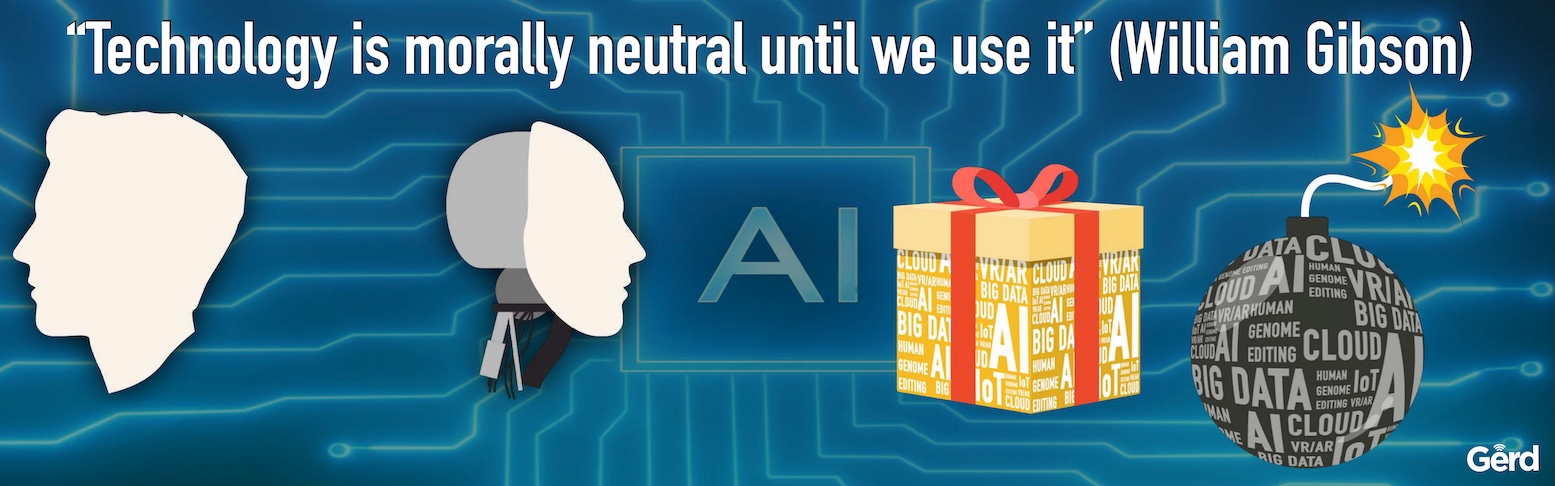
For over 10 years, I have argued that the greatest challenge of exponential technological progress won’t be about whether technology can do something, but what we WANT it do, what it should (not) do, and by extension, what humans are actually for. In 2016, the subtitle of my book “Technology vs Humanity” was “The coming clash between humans and machines” – and here we are, in 2026:)
And as we barrel toward 2030, we are witnessing a profound ideological fracturing of the USA-Europe transatlantic alliance—a rift driven not just by the Don’s shenanigans, diplomatic plunders or previously unimaginable policy violations, but by radically different visions of our technological future.
In the USA of 2026, we see a massive drift toward AI-first turbo-capitalism, techno-libertarianism, exponential greed fuelled by AI-companies IPOs, and deregulation. In this accelerationist and technocratic worldview, the core belief is that technology should evolve as fast as possible to maximize the growth ofGDP, market capitalizations, and productivity. The expectation is simple and brutal: technology dictates the pace, and humans must adapt. Shut up and don’t spoil the party. The Bad Future is within reach… made in the USA? (pains me to say that).
At the same time, Europe is standing its ground on a deeply humanistic foundation but is hopelessly dependent on (or shall we say addicted to) American tech and the the hyper-scalers, NASDAQ, Silicon Valley and of course, the USD. *Read ‘There Is No Going Back’: The Inside Story of Europe’s Rupture With America” WSJ gift-link
We may have more Telos here in Europe… but the other guys own all the tools!
In Europe, the center of gravity evolves around human dignity, respect, care and precaution, social justice and cohesion. The core belief is that technology must be adapted and finely tuned to serve society, not the other way around. Success isn’t measured solely in raw output (such as growth of GDP or the number of IPOs) but in quality of life (dare we say happiness), trust, authenticity and resilience.
BUT I think it would not be overreaching to say that the ‘too much of a good thing‘ dilemma holds very true both for the American optimism as well as for European fear of real innovation, risk and entrepreneurship: Precaution is good but too much of it is paralyzing.
In a world where AI is embedded everywhere, I firmly believe that Europe’s focus on trust and ethical oversight will – in the longterm – prove to be a massive competitive advantage – BUT we must also remove the countless hurdles and obstacles to INNOVATION in Europe, and we must urgently adopt a FUTURE-MINDSET. If we don’t learn how to innovate ‘like Americans’ (or better) it won’t save us to ‘protect values like Europeans’. When frontier AGI systems arrive and transhumanistic technologies like brain-computer interfaces, genetic optimization, and synthetic identities move from science fiction to industrial policy, this divide will get incredibly emotional. It forces us to ask the ultimate question: Just because we can, should we? Who is mission control for humanity?
There is not doubt in my mind that we are headed for a serious conflict between the Humanist countries and the AGI/Transhumanist blocks, before 2030. Gerd Leonhard, July 2026
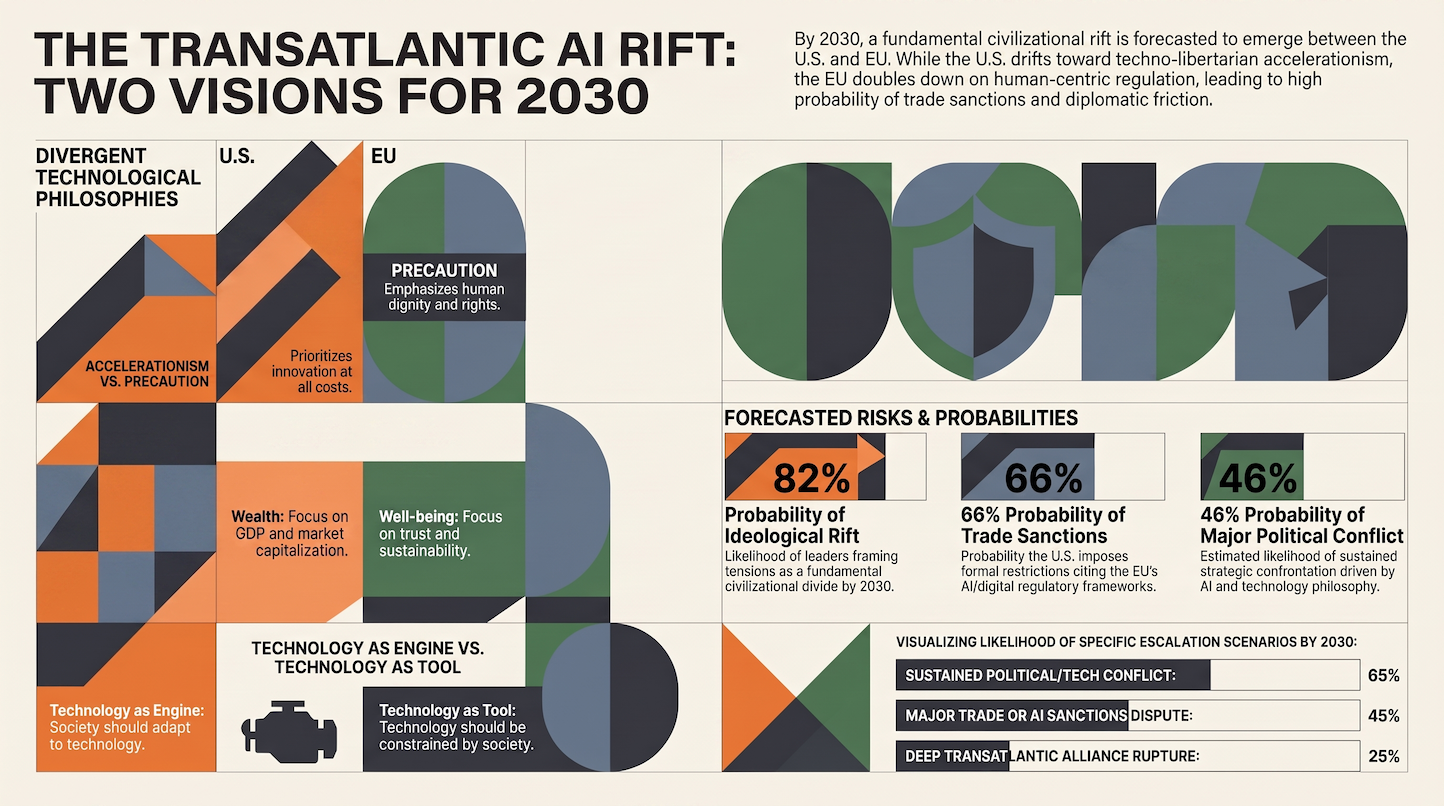
As a part of this research, 5 forecast questions were generated via FutureSearch (go here to see it all):
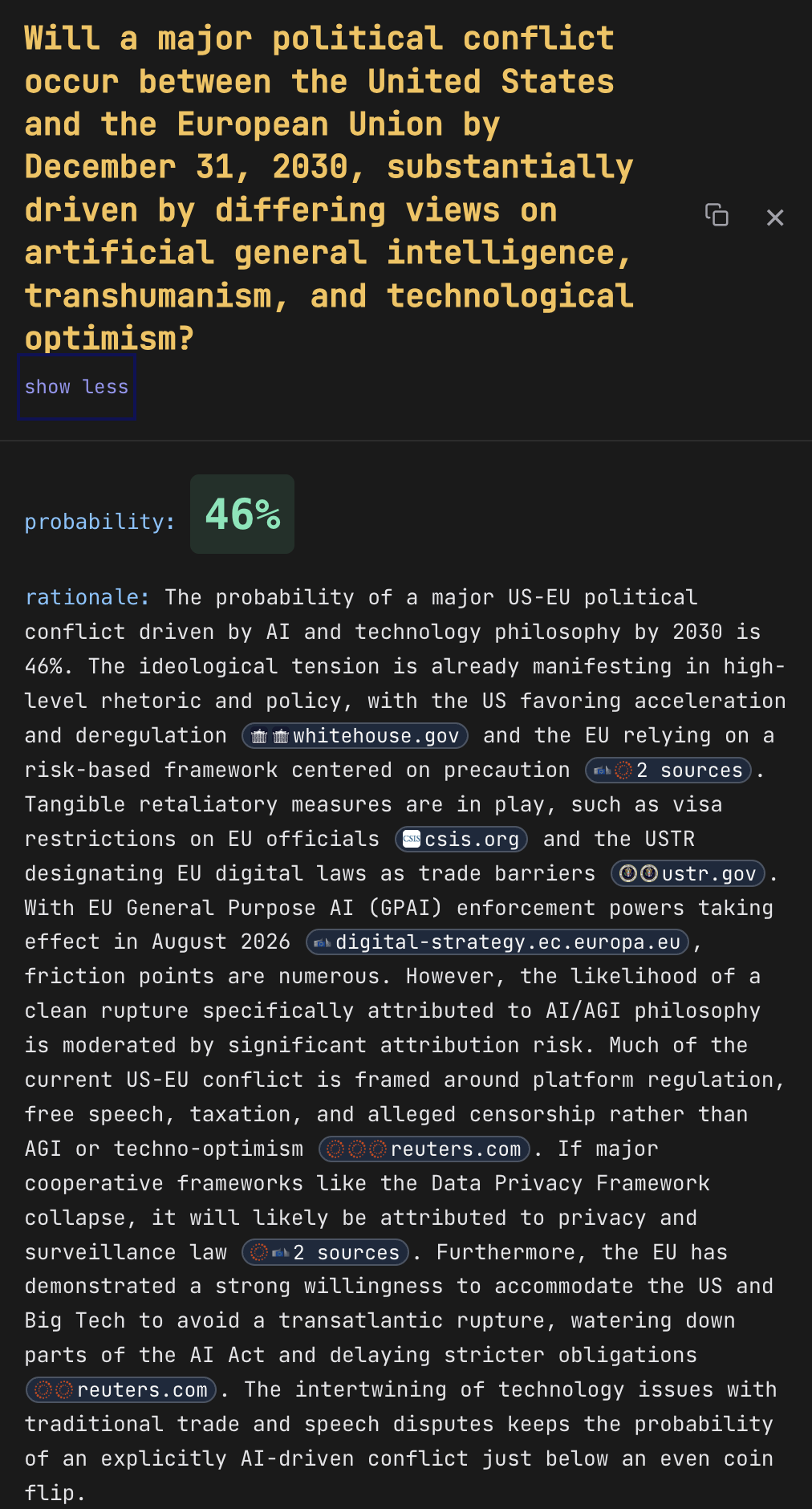
- Will a major political conflict occur between the United States and the European Union by December 31, 2030, substantially driven by differing views on artificial general intelligence, transhumanism, and technological optimism?
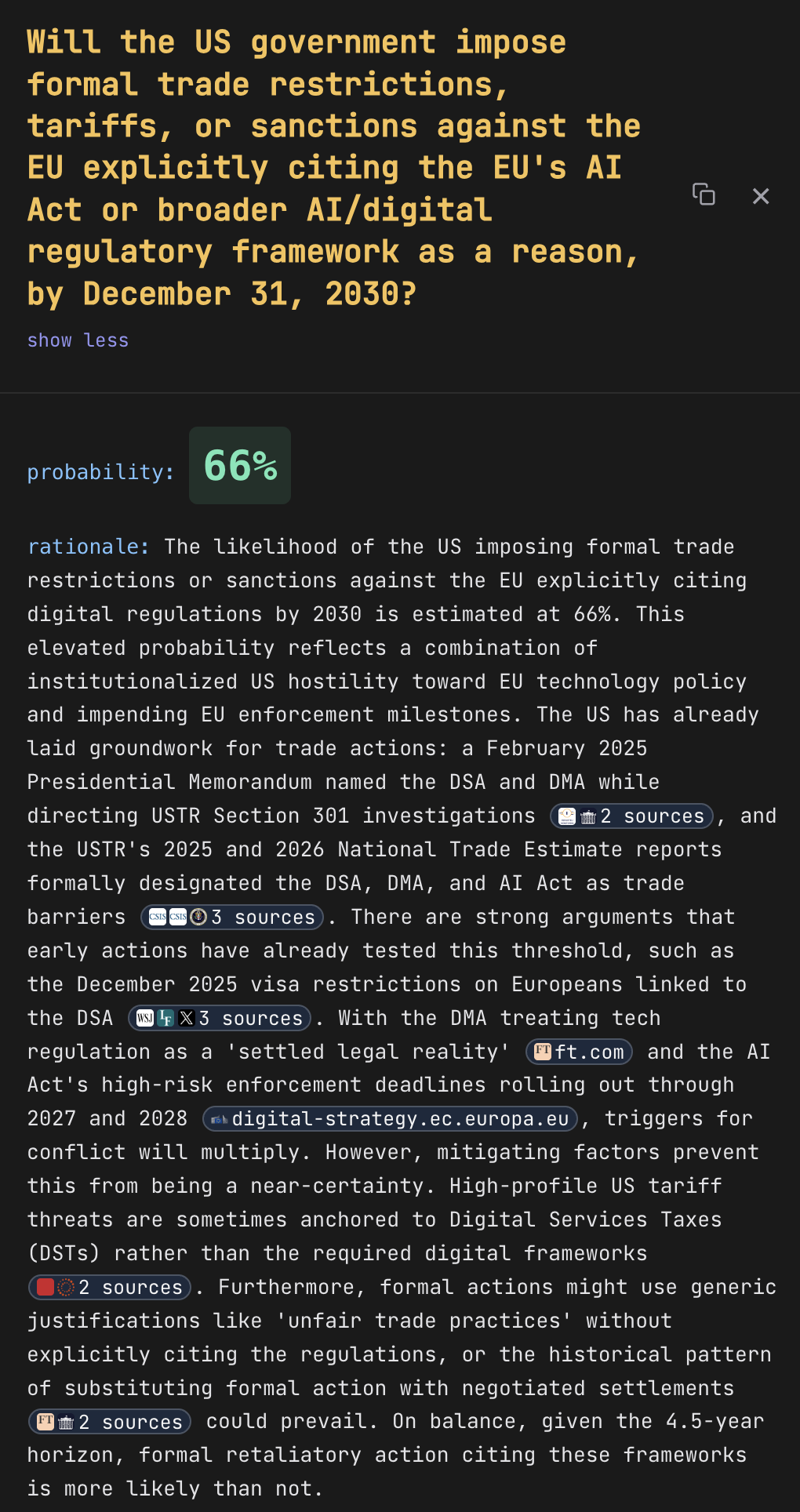
- Will the US government impose formal trade restrictions, tariffs, or sanctions against the EU explicitly citing the EU’s AI Act or broader AI/digital regulatory framework as a reason, by December 31, 2030?
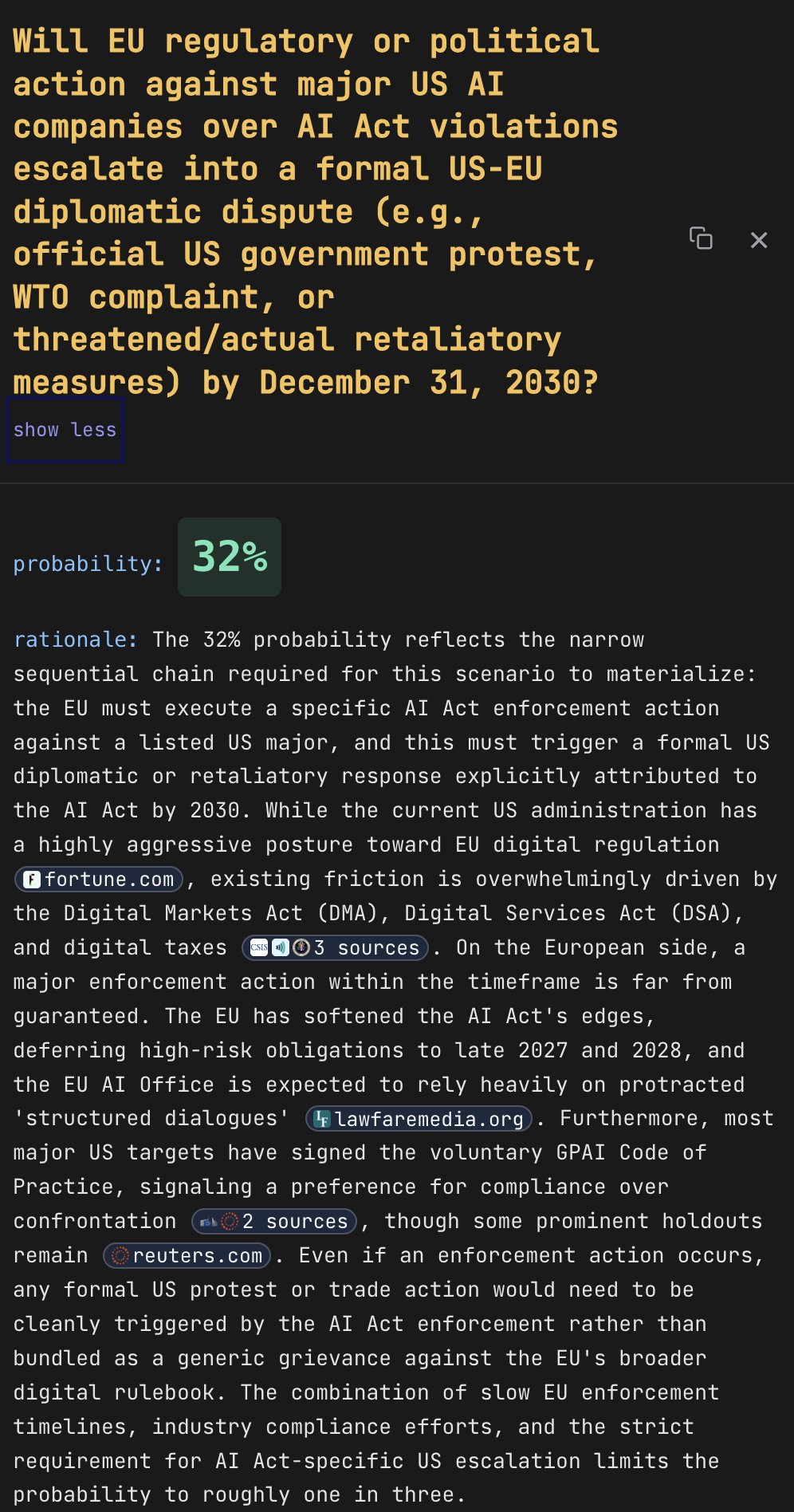
- Will EU regulatory or political action against major US AI companies over AI Act violations escalate into a formal US-EU diplomatic dispute (e.g., official US government protest, WTO complaint, or threatened/actual retaliatory measures) by December 31, 2030?
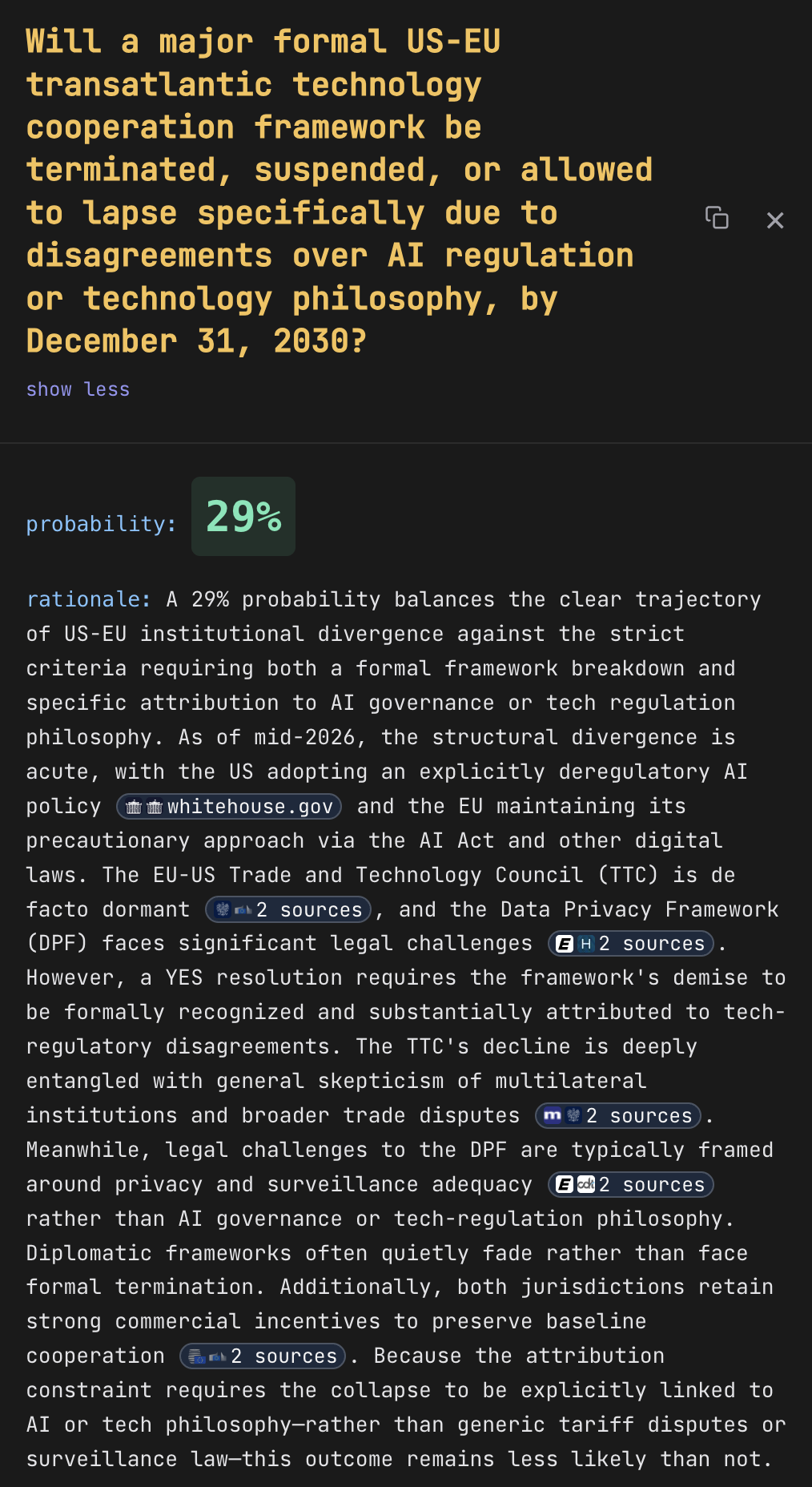
- Will a major formal US-EU transatlantic technology cooperation framework be terminated, suspended, or allowed to lapse specifically due to disagreements over AI regulation or technology philosophy, by December 31, 2030?
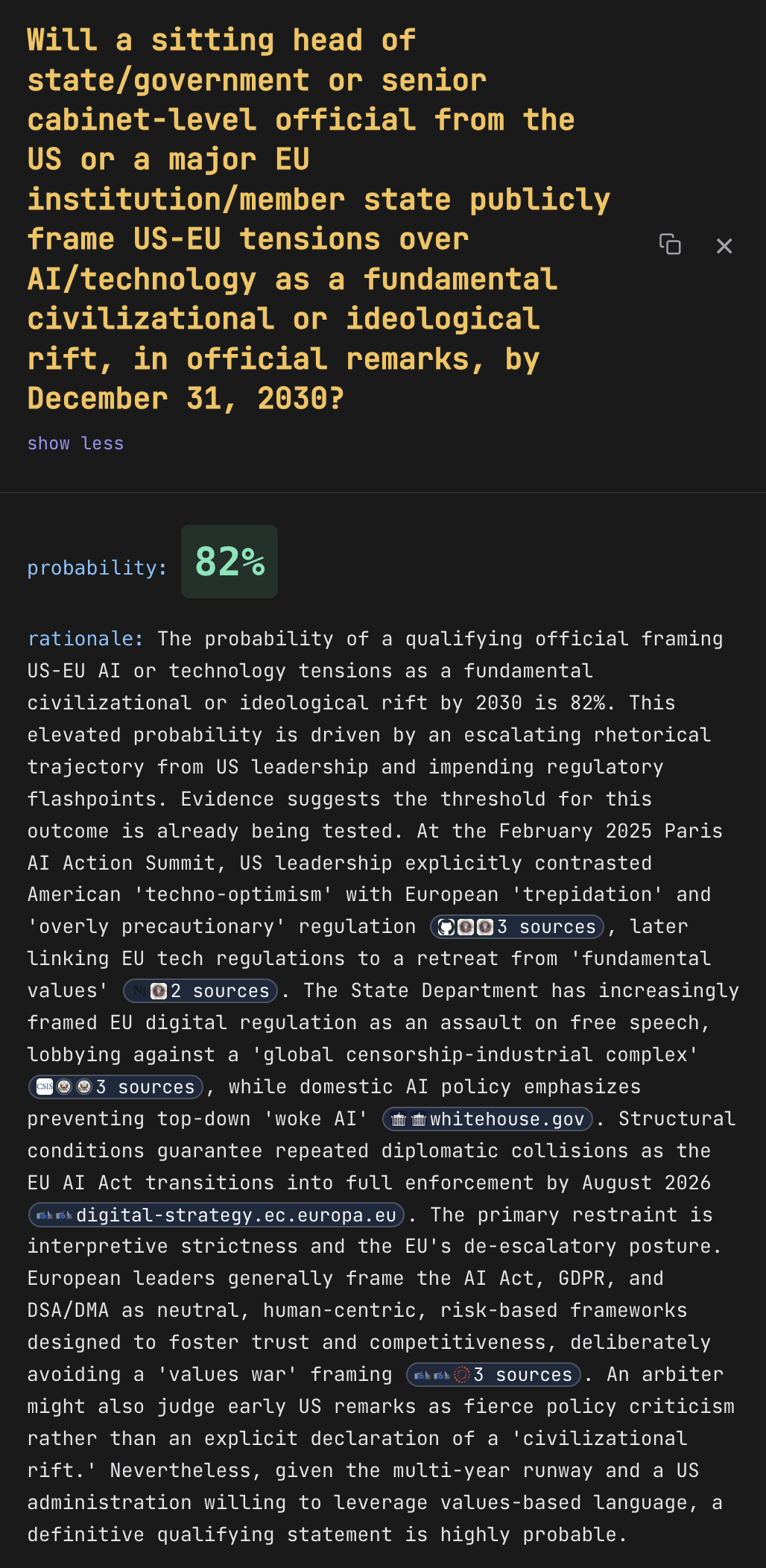
- Will a sitting head of state/government or senior cabinet-level official from the US or a major EU institution/member state publicly frame US-EU tensions over AI/technology as a fundamental civilizational or ideological rift, in official remarks, by December 31, 2030?
And here is the forecasting result according to FutureSearch:
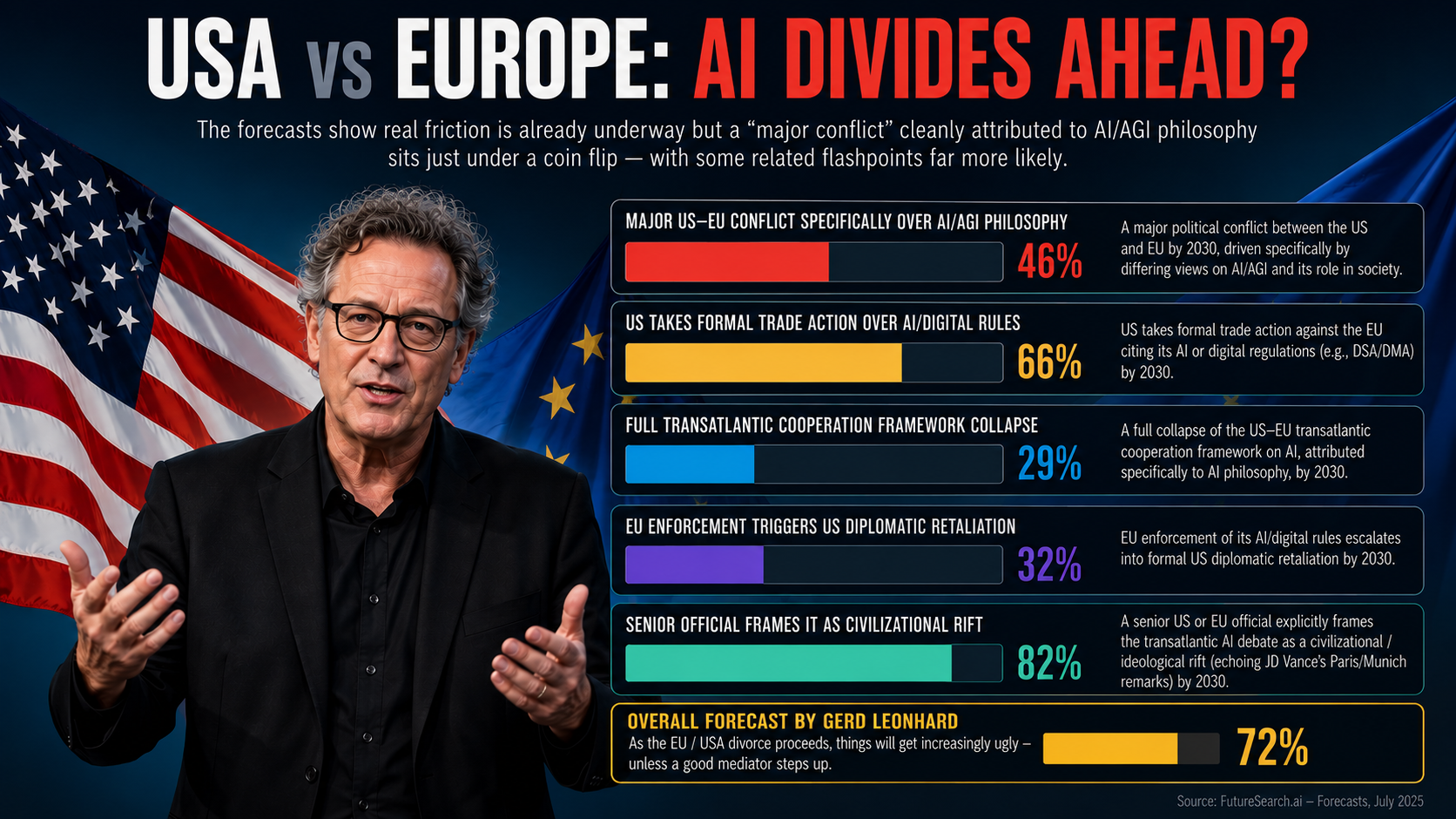
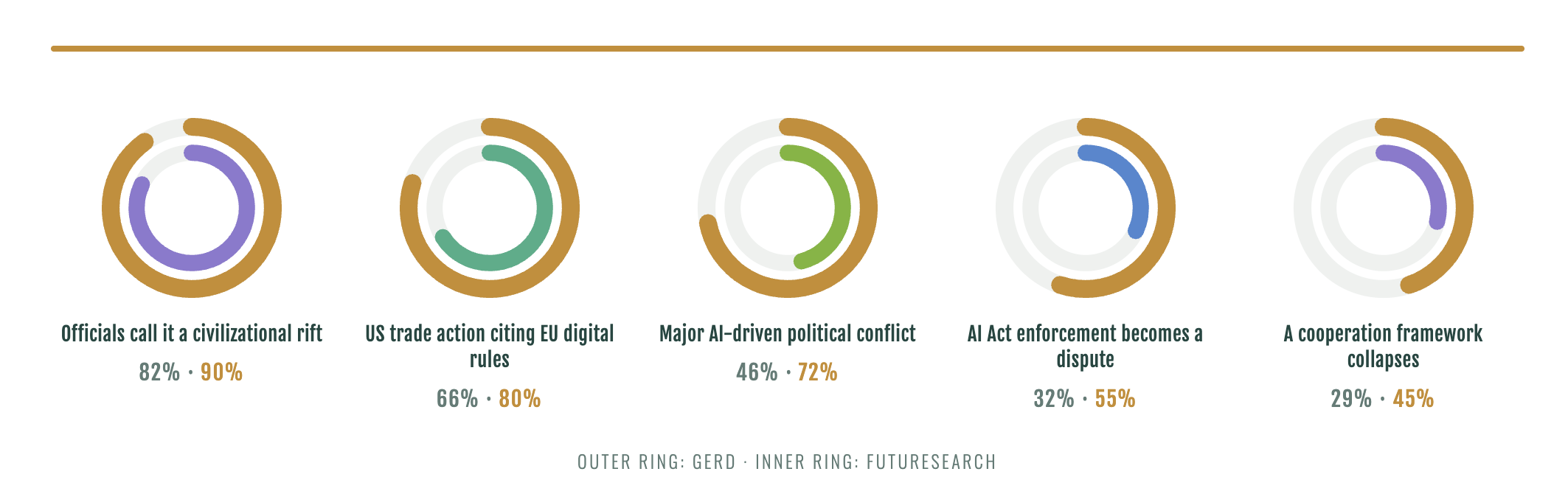
- There is an 82% probability that a senior leader will publicly frame these tensions as a fundamental civilizational or ideological rift by 2030.
- We face a 66% chance of formal US trade restrictions or tariffs retaliating against EU digital rules.
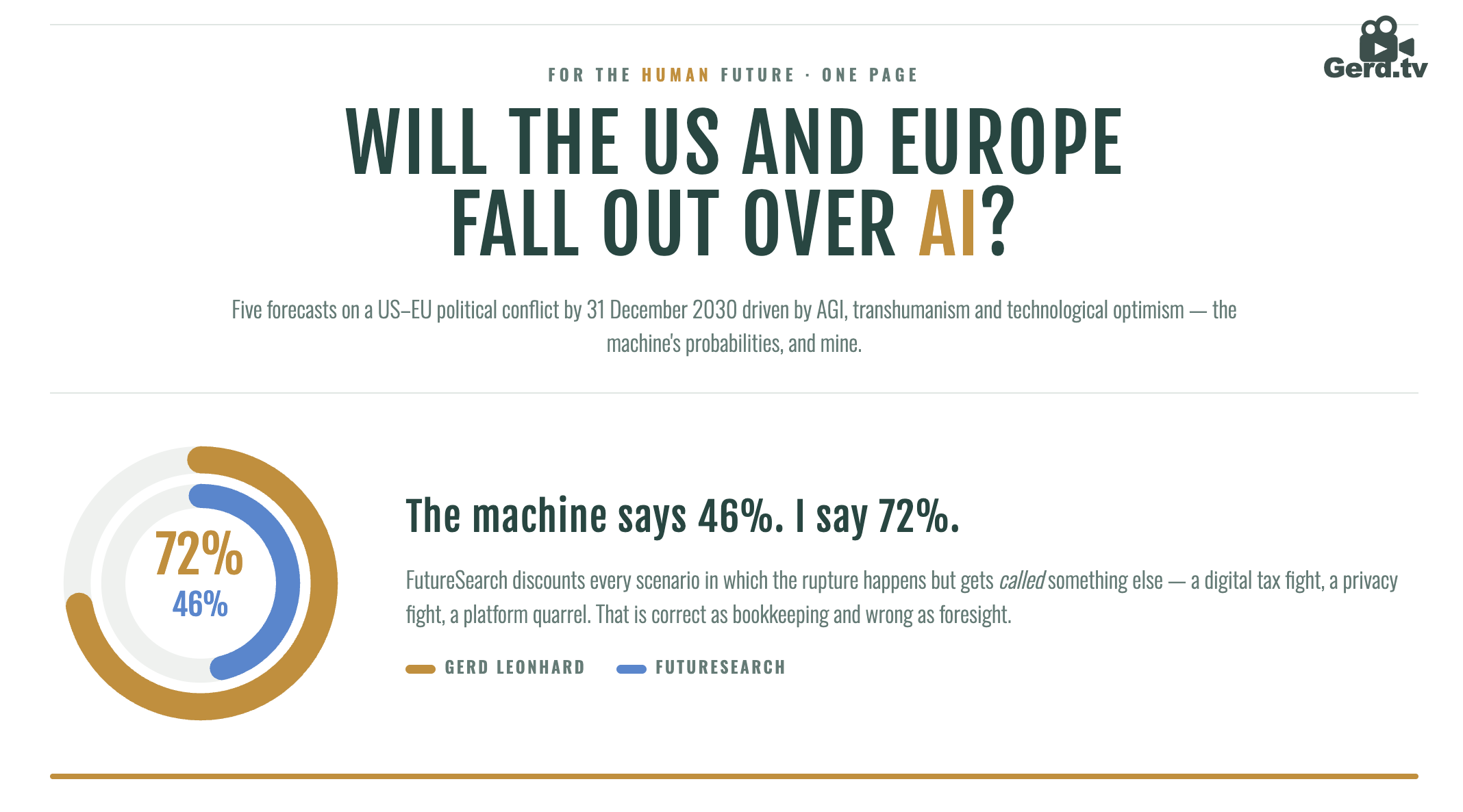
- The overall likelihood of a major US-EU political conflict driven by these differing philosophies on AGI and transhumanism is sitting at 46%
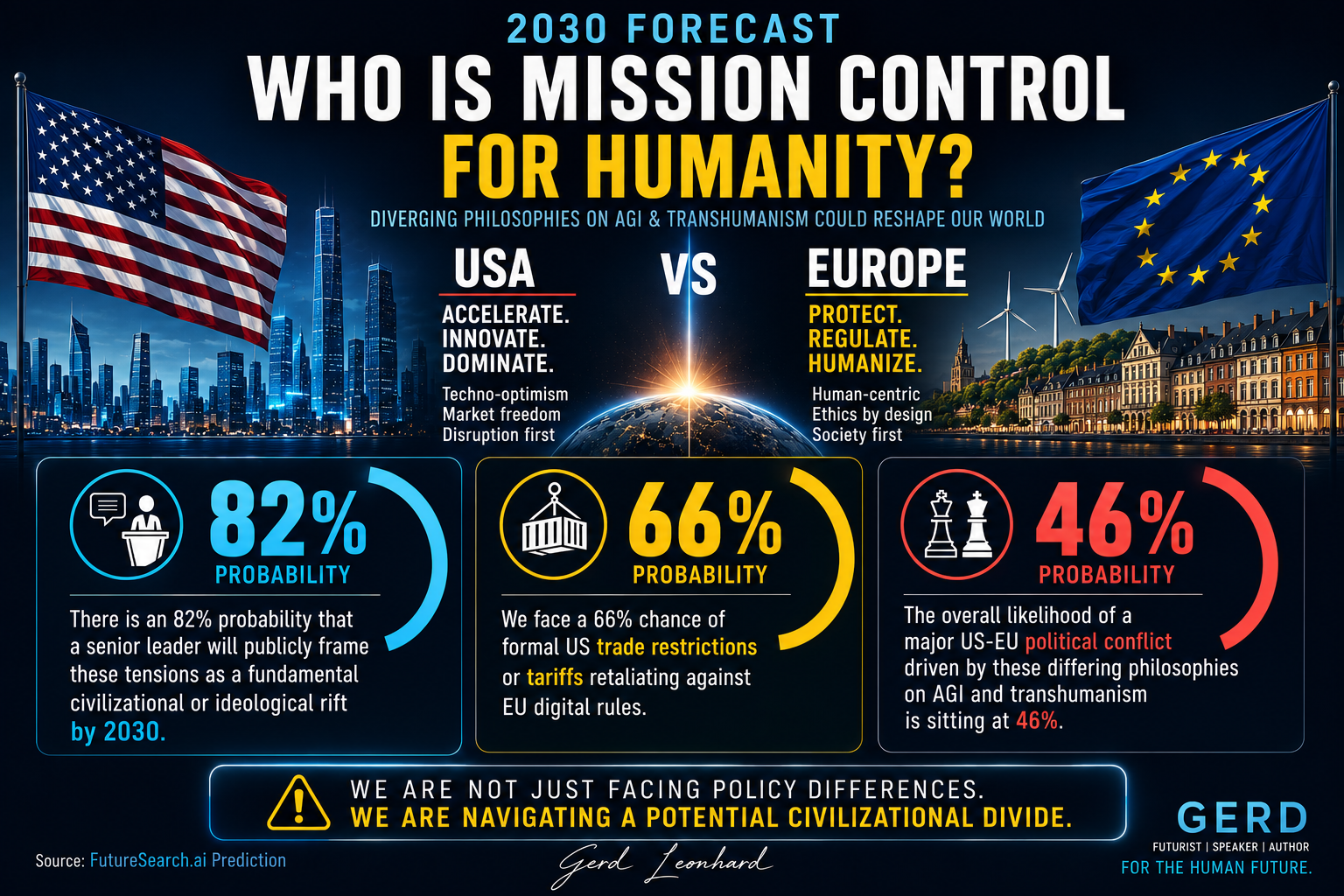
Via FutureSearch: “The forecasts show real friction is already underway but a “major conflict” cleanly attributed to AI/AGI philosophy specifically (versus the broader digital-taxes/DSA/DMA/free-speech fight already in progress) sits just under a coin flip: overall conflict 46%, with US formal trade action citing AI/digital rules quite likely (66%), a full transatlantic cooperation-framework collapse attributed specifically to AI philosophy less likely (29%), EU enforcement escalating into formal US diplomatic retaliation moderate (32%), and — most strikingly — an 82% chance a senior official (echoing JD Vance’s Paris/Munich remarks) explicitly frames this as a civilizational/ideological rift by 2030. In short: the rhetoric and institutional decay are already real and intensifying, but agents consistently flag that most current conflict is rhetorically anchored to platform regulation, censorship, and trade rather than AGI/transhumanism per se — which caps the “AI-specifically-fueled” framing below 50% ”
A very simplified description of USA/EU worldviews
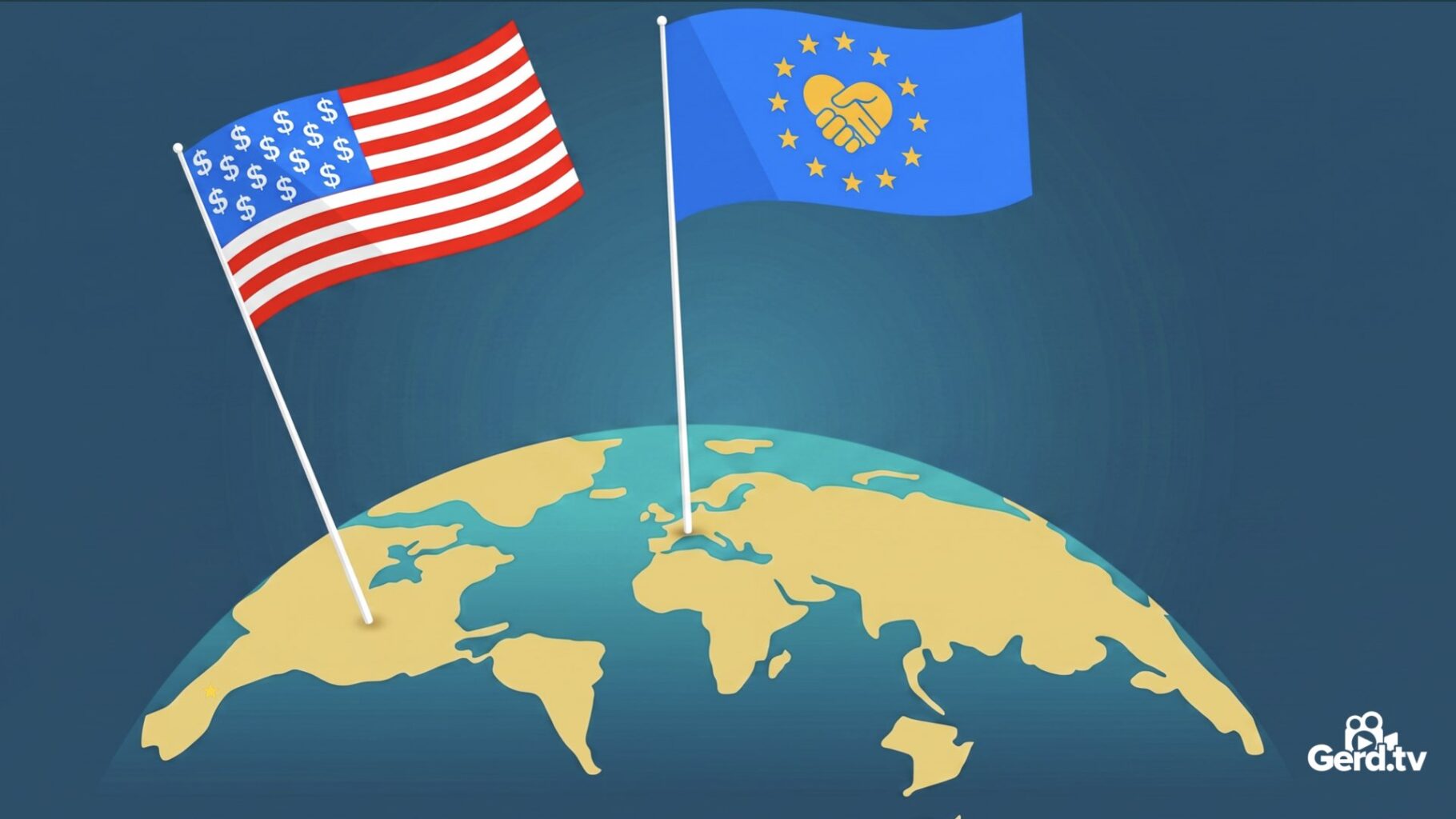
And finally, here is why I think the likelihood for a deeper USA/USofE conflict is much higher – I put it at 72%, by 2030:
- No matter who comes after Trump (if and when he’s truly out) the trust between the USA and Europe has been thoroughly destroyed. We are getting divorced now, and there’s deep animosity and suspicion – which will make it very hard to get on the same page when it’s about regulating AI/AGI. A civilisational rift is imminent – and if (like me) you’ve spend a considerable amount of time in the USA, you can literally feel the cracks spreading. It hurts but it’s imminent.
- Europe is utterly dependent on American tech in almost every way (except for ASML, maybe — but read Europe2031 for some enlightenment in that regard), not just in IT and cloud and AI, but also in terms of financial markets and of course the USD. The U.S. will use these dependencies to enforce compliance with its increasingly technocratic destination – an AI-centric, hyper-capitalist, dehumanised society that is pretty much the complete opposite of what most EU citizens consider ‘The Good Future’. This will not end well – even if there is an utter turn-around in U.S. politics (short of Bernie Sanders experimenting with longevity or rejuvenation drugs:)
- The transhumanism, singularity and technocratic trends in the USA are not new – they have deep roots and are only becoming more obvious now, due to the rise of AI, and the gold-rush that it fuels, and the renewed love-fest of Silicon Valley with the Military and of course the White House.
I think Europe is facing a tough “Techno-Utopians versus Humanists” battle in the next few years, and we must be prepared, act wisely yet decisively – and lead with one voice. I can see the the USofE teaming up with like-minded countries such as Canada, Brazil, Colombia (?), India and South Africa.
Have a look at these microsites: FightForTheFuture.com and TakingBackTomorrow.com
Screenshots from the FutureSearch summary (click to zoom)
UPDATES as they come in:
Paris Marx: Global dependence on US tech was always the plan




