Democracy in the age of AI: Gerd Leonhard Collected Posts since 2022
Full text from 18 posts in Gerd Leonhard’s FUTURISTGERD Democracy archive. Each article shows at most one image. Original posts contain the complete visual galleries. Historical forecasts reflect the views expressed at the time.
1. AI and Democracy: Must watch video by the amazing Bruce Schneier
2025-02-14
Here is a 5* brilliant talk by the fabulous Bruce Schneier at the RSAC Summit
“AI is altering fundamental work of democracy globally: campaigning, voting, writing legislation, enforcing policy, how courts are run and more. Many of the changes will make democracies more responsive to the will of the people, involve citizens ever more deeply in governance, and could make aspects of our society more just, if we begin the conversation now to create secure and trusted AI systems”
More about Bruce https://x.com/schneierblog
Summary by Google Notebook LM::)
This YouTube transcript features Bruce Schneier discussing the impact of artificial intelligence on democracy. He explores AI’s core capabilities – summarising, explaining, persuading, predicting, assessing, and deciding – and how these will transform politics, lawmaking, administration, the legal system, and citizen engagement. Schneier examines both potential benefits, such as increased efficiency and accessibility, and risks, including power imbalances and the erosion of human agency. He emphasises the need for security measures and ethical considerations to mitigate the negative consequences of widespread AI adoption. The Q&A session further explores concerns about disinformation, bias, and the potential for AI to surpass human oversight.
Briefing doc generated by Google Notebook LM: wow!
There is a detailed briefing document reviewing the main themes and important ideas from the provided source, (above and here) “AI and Democracy”, by Bruce Schneier.
Briefing Document: AI and Democracy – Key Themes and Ideas
Introduction
This document summarises the key points raised by Bruce Schneier in his talk “AI and Democracy,” which explores the potential impact of artificial intelligence on various facets of democratic systems. Schneier’s approach is optimistic about the technology itself, but more realistic about its societal implications, particularly in how it might shift power dynamics and change core functions within democracy. The talk primarily focuses on the ‘second-order’ effects, looking beyond direct human replacement to consider how the changes in speed, scale, scope and sophistication driven by AI will fundamentally alter established processes. Schneier emphasizes the need to anticipate these changes and proactively engage with their implications to ensure a positive outcome for society.
Key Themes and Core Competencies of AI
- AI’s Impact is Pervasive: Schneier begins by stating that AI will “affect every aspect of our society,” not necessarily by introducing new activities, but by performing existing human tasks in a fundamentally altered manner through changes in speed, scale, scope, and sophistication. For example, “The problem with AI trading stocks isn’t that they’re better than humans, it’s that they’re faster.”
- Core Competencies: Schneier identifies six core competencies of AI relevant to democracy:
- Summarisation: AI excels at condensing large amounts of information.
- Explanation: AI can teach with infinite patience.
- Persuasion: AI is effective at influencing opinions and behaviours, leading to applications like propaganda.
- Prediction: AI can make predictions about a wide range of outcomes, from route navigation to medical diagnosis.
- Assessment: AI can assess information against defined criteria, though this is an area still under development.
- Decision-Making: AI is capable of making decisions based on predictions and assessments. “A decision is basically a prediction plus an assessment and we’re already using AI to make all sorts of decisions.”
- The “Second-Order” Effects: Schneier is primarily concerned with the indirect societal impacts that arise from these changes rather than the direct replacement of human tasks. He is “more looking at the second order effects of those substitutions, like how the underlying systems will change because the changes in speed, scale, scope, and sophistication.”
AI’s Potential Impact on Democracy: Five Key Areas
Schneier explores five key areas where AI will impact democratic systems:
- AI-Assisted Politicians:
- Personalised Engagement: AIs can be used to engage directly with voters through personalized chatbots, creating individually tailored campaign appeals, and conducting polls.
- Campaign Management: AI can assist with fundraising, media outreach, and general campaign coordination at scale.
- The AI-Driven Politician: Politicians may become increasingly reliant on AI systems for everything from communications and speechwriting to political strategy. “In the future, I think that we will accept that almost all communications from our leaders will be written by AI.”
- Arms Race: Schneier anticipates an “arms race” as politicians adopt these tools, raising questions about whether AI tools favour any one political ideology.
- AI-Assisted Legislators:
- Sensemaking: AI can help legislators summarise constituent feedback and identify key arguments, as well as detect coordinated lobbying efforts.
- Law Drafting: AI can write laws, as demonstrated by the recent case in Brazil where an AI-generated law regarding water meters was successfully passed. “A law is just a piece of generated text that a government agrees to adopt.”
- Loophole Creation: AI will be able to “find legal loopholes or creating legal loopholes”, similar to finding vulnerabilities in software.
- Micro Legislation: AI can introduce subtle yet impactful changes to laws through “micro legislation” (e.g., altering a word or punctuation mark).
- Simulations: AI can simulate the potential consequences of policy changes, allowing for more informed decision making.
- Complex Legislation: AI can craft laws with a level of complexity that surpasses human ability, potentially shifting power balances between the legislative and executive branches.
- Black Box Laws: Schneier presents a thought experiment about laws defined by AI’s actions (e.g. reckless driving defined by a neural network) where “no human could ever understand” the law.
- AI-Assisted Bureaucracy:
- Automated Administration: AI can streamline administrative tasks such as benefits processing, contract management, and navigating complicated rules.
- Advanced Negotiations: AI has the ability to handle complex negotiations that can involve thousands of variables simultaneously, unlike humans who are limited. This raises the question of if humans would “blindly follow the AI”.
- Institutional Design: AI could generate more optimal designs for government institutions, though these would be inherently more complex.
- AI-Assisted Legal System:
- AI Lawyers: AI systems can drastically reduce the cost of legal advice and representation and perform routine legal work, providing services to those who previously couldn’t afford them. “An AI public defender is going to be a lot better than an overworked, not very good human public defender.”
- Sophisticated Legal Arguments: AI could create much more sophisticated legal arguments, accessing all legal precedence to bolster a case.
- Changes to Lawsuits: A drop in cost for lawsuits due to AI could lead to an overwhelming increase in litigation, reducing their social signalling.
- Law Enforcement: AI can automate law enforcement through technologies like traffic cameras, tax audits, and fraud detection. This raises concerns about false positives, and a potential for lack of contesting against computer “judgement.”
- Regulation Enforcement: AI could be used to enforce regulations more effectively, such as monitoring slaughterhouses for animal welfare violations.
- Expert Opinions: AI can provide expert analysis in complex cases (e.g. traffic accident reconstruction) due to greater capacity to analyse the data.
- Automated Adjudication: AI can perform judging tasks, particularly in areas with large backlogs, potentially providing faster justice, for example, AI could be used in contract arbitration with no legal changes necessary.
- AI-Assisted Citizens:
- Issue Understanding: AI can explain complex issues and provide political commentary, giving a greater insight to the public.
- Moderation and Consensus: AI can act as a moderator and facilitator for group discussions, useful in any decision making scenario.
- Government Watchdog: AI can monitor government activities, flagging changes in positions and other relevant information.
- Bureaucracy Navigation: AI can help people navigate bureaucracy, accessing services and contesting decisions.
- Elimination of Politicians: In a more radical vision, personal AI assistants can extrapolate political preferences, advise on votes, and even act as personal representatives, leading to a shift away from traditional representative democracy. This may lead to more ballot initiatives.
- The Value of Human Debate: Schneier notes that AI providing the “right answer” might be less beneficial than the human process of discussion and debate, as this process is valuable itself.
Changes of Degree and Kind
Schneier highlights how subtle changes can lead to larger societal shifts, particularly in:
- Sophistication of Lawmaking: AI will lead to more detailed and complex laws.
- Scale of Lawyering: AI could make legal services readily affordable, causing a surge in litigation.
- Speed of Adjudication: AI can lead to faster dispute resolution, which may change the nature of disputes and resolution.
- Scope of Enforcement: AI could make it nearly impossible to evade certain laws, affecting the behaviour of the powerful.
Security Concerns
Schneier stresses the need for robust security measures when deploying AI in democracy:
- Incentives: The incentives of AI users, owners, and society may be misaligned. He points to surveillance and advertising as likely AI business models, and the potential for conflict between what users want and what society needs.
- Risks: The cost of errors varies widely, and this needs to be accounted for when deploying AI in different contexts. “If an AI is helping someone fill out their immigration paperwork and it makes a mistake, they get deported.”
- Mistakes: AI mistakes can differ from human errors, and corrections must be integral to the system.
- Adversarial Environments: In cases of conflict (e.g., international trade negotiations), AI systems may be subject to subversion and disruption.
- Power: AI magnifies existing power imbalances, emphasizing the importance of ensuring equitable and responsible application. “Can we build systems that reduce power imbalances rather than increase them?”
- Privacy, Equity, Transparency, and Trust: All are important factors when deploying AI in a democratic setting, but definitions vary depending on the application and needs. The potential need for open-source AI models which are not owned by global corporations is also highlighted.
The Future
Schneier concludes that AI is a powerful technology with the potential to reshape society. Its impact on democracy is profound, bringing about new complexities. He argues that whether this is a net positive or negative depends on the choices made today. The security sector has a vital role to play in ensuring that AI’s power is used for the benefit of all and does not reinforce existing power structures.
Additional Points
- Dissidents: The increased enforcement and surveillance capabilities of AI could severely limit the ability of dissidents to create change, by making it more difficult to question or experiment in private with ideas that the majority see as unacceptable.
- Ethics: Current tech policies are primarily influenced by large corporations, which has proven detrimental for society. The speed of change introduced by AI may make existing problems more challenging.
- AI Bias: AI systems will reflect the biases of their creators or the data used to train them and will require oversight and care to minimise.
- Misinformation: Schneier downplays the concern that AI will lead to increased misinformation, as it is already at a “peak.” The problem is more closely linked to filter bubbles and social signalling and will require addressing through antitrust laws to break up tech monopolies.
This document provides a comprehensive overview of Schneier’s talk. Further research into the specific areas outlined in the talk is recommended to understand the full potential impacts of AI on democratic systems. (ALL OF THE ABOVE WAS GENERATED WITH NOTEBOOK LM)
I also asked Notebook LM to make an audio podcast conversation, based on Bruce’s video – for what it’s worth… embedded below:)
Originally published on 14 February 2025. View the original post.
2. From Doom & Gloom to Optimism & Hope: A guest post by William E. Halal
2023-01-06

From Doom & Gloom to Optimism & Hope, by William E. Halal, (PhD); The TechCast Project and George Washington University.
Bill is a like-minded thinker, friend and fellow futurist, based in Washington DC. Check out his latest must-read book ‘Beyond Knowledge‘, and the video / live-stream event we did together last year.
TechCast Research takes on the deadening pessimism that “nothing will change,” “things could get worse,” “we can’t know the future,” and the host of other fears that inevitably drive a crisis to go on. We suggest that only a transformation in the prevailing mindset can help. The world needs nothing less than a spiritual epiphany, and soon.
Summary & Overview
We proudly present our cutting-edge study that draws on key trends and expert knowledge to forecast a “break” in the global fever of doom and gloom. Major trends outlined below allow us to call for finding faith in the supreme flow of evolution now moving into an Age of Consciousness. The world is living beyond knowledge now, with emotions, values, believes and other subjective form of consciousness dominating modern life. With this in mind, here’s how we envision this critical change playing out in the next few paragraphs.
A warming climate is almost certain to raise the stakes dramatically over the next few years, further driving the major move toward greenhouse gas reductions already planned. The US $360 Billion climate program and corporations investing $ 9 Trillion could lead the way out of this mess. Other nations are likely to follow, starting the resolution of this central challenge in the global crisis. This turning point would be supported by the business plans underway to solve environmental and social problems (ESG, stakeholder enterprise, etc.), setting a new global standard for collaboration. Climate damage will likely remain as yet, but a shift in attitude and intention would then energize ideas and action.
The much-anticipated global recession will likely run its normal course in 2-3 years, prompting a rebound in economic growth. This time, growth is likely to be propelled by the takeoff of AI, forecast at about the same time. With the automation of routine jobs and the growth of the new class of “creative work”, also anticipated, a global boom is likely about 2025. With threats now more prominent, growth would be fueled by focusing on solutions to the crisis — climate mitigation, renewable energy, cooperation with developing nations, etc.
All this renewed energy is likely to be encouraged by a renewed faith in democracy as the rise of autocrats reaches its end. Trump will almost certainly have been charged with crimes against the US government, Russia’s war of aggression will have ended badly for Putin, Iran is likely to have been forced to allow its citizens normal freedoms, and China may feel the rise of demands for liberation. The triumph of democratic rule is likely to produce a resurgence of shared governance, extending to cooperation on the Crisis of Global Maturity.
TechCast is not naive, so we are aware that events will not play out neatly. Barring anything truly devastating, the three super trends noted above — collaborative action on climate, resurgence of economic growth, and a renewed dedication to democracy — should dominate events.
We feel fairly confident in forecasting this break to occur about 2027, much like the 2022 US midterm elections broke the crisis in American democracy. Specifically, this study suggests a 66 % probability that the prevailing Crisis of Global Maturity is likely to turn into hope for solutions about 2027 +/- 3 years. This global crisis break, would then allow renewed efforts to think seriously about solutions — leading to our forecast of Global Consciousness about 2030.
Forecasting Global Crisis Break
A societal crisis is much like a bodily fever. Both grow to severe levels that may not be sustainable. Things get worse. Threats abound. The future looks grim. Yet — at some point the fever breaks. The crisis turns from pessimism to hope.
This study focuses on the prospect of a break in the global crisis of climate change, more pandemics, global recession, inequality, and other threats to come. We aim to forecast when and if today’s nagging pessimism will break, like the break in a fever. When a majority of people around the world become optimistic about the future. When prevailing attitudes switch from doom and gloom to faith and hope.
Our earlier Trend Analysis defined 15 trends driving the Crisis of Global Maturity and 12 trends acting to resolve it. Here’s a quick summary of highlights on the crisis:
The Crisis of Global Maturity
Global Pandemics Likely to Continue. The Covid pandemic is but the latest threat from more global infections to come. The Global Health Security Index recently noted “every country, including the US, remains dangerously unprepared for … future pandemics.”
Democracy in Decline. A PEW Research Center poll finds that only 17 percent of people in democratic nations are confident in the US as a role model of democracy.
Probability of Disaster. The Marien and Halal Study found a 60-70% probability of disaster from climate, pandemics, financial collapse, inequality, conflict, terrorism, water, cyberwar, etc.
Majority Fear We Are Doomed. A New York Times Survey of 10,000 people found that “56% think humanity is doomed.”
UN Reports on Climate Are Dire. The most recent report of the International Panel of Climate Change (IPCC) warned that “Total societal collapse is likely unless major decline in carbon emissions is made soon.
Most Likely Scenario/Driving Forces for About 2026-28
To put this issue in sharper focus, we outline trends shaping up into a moment of truth. Here’s a scenario of what we think are key trends and driving forces likely to affect the mid-term, five-year planning horizon of about 2026-28:
Climate Worsens but Provokes Action: The fires, droughts, heat, floods and other damage caused by climate change is almost certain to intensify. Fortunately, so will attempts to resolve the climate threat. Biden’s $360 Billion program seems promising, other nations are doing the same. McKinsey Consulting expects business to invest $ 9 trillion per year alleviating climate change. The fear of relying on Russian oil and gas is driving a rush to energy independence and renewables should exceed the use of coal by 2025. (Washington Post, Dec 13, 2022)
Democratic Enterprise Coming: ESG is now practiced in 90% of corporations and growing. TechCast estimates a 70% probability that stakeholder governed corporations will enter mainstream use this decade.
Global Recession Ends: Central banks are raising interests rates to reduce inflation, while global debt has doubled recently, making the downturn painful. The decline may be deep, but it should also run its course to produce renewed growth about 2024-25. This time, it is likely to be led by government spending and demand that remains strong. The collapse of the Tory government under Liz Truss in the UK refutes faith in “trickle down” theory (tax cuts, reduced public services, etc.), whereas the US programs under President Biden demonstrated that government can spur growth.
AI Takes Off: Our forecasting consistently signals that AI is likely to pass the critical takeoff point about 2025 +/- 2 years. This will eliminate many routine jobs and create new creative jobs, and cause more subjective forms of thought to proliferate, as well as more disinformation. Automation will provide far higher level human attention, and the intelligence to do what seems impossible now. This newfound power of AI will also poses enormous risks, stressing the necessity to establish strong AI controls.
Peak Trump: It is increasingly clear that former President Trump and his associates are likely to be indicted for criminal charges, possibly sometime in 2023. The reaction of his followers could be violent, but the Department of Justice says it cannot allow the law to be disregarded. Trump’s associates could be charged first, thereby gaining more information to support an indictment against the former president and preparing the public for the worst to come. The US mid-term elections confirmed Peak Trump. Even GOP leaders are moving away from Trump, finally! In symbolic terms, this could play out as Dept. of Justice Chief Merrick Garland assumes the heroic stature of Saint George slaying the fierce dragon of evil.
End of the Russian War Against Ukraine: The Russian military is nearing exhaustion, while Ukraine shows no signs of yielding, setting the stage for some type of negotiated settlement — as all wars do eventually. Ukraine may cede some territory to Russia, and it may agree to refrain from supporting NATO strategic arms. Putin and his generals are likely to be charged with war crimes.
Decline in Autocracies: The Trump rebellion and Putin’s war on Ukraine seem to be failing, and Bolsonaro was defeated in Brazil. China’s turn to state control is condemned to harm economic growth and freedom. Iran is throes of rebellion. After the past decade of strongman rule, could this mark the decline of autocracy? But Netanyahu is following the Trump playbook in Israel.
Continued Rights Movement: Following gay rights, #MeToo, BLM, we now see young women in Iran ignite widespread protests, with men also challenging the regime. After hundreds of deaths and thousands of arrests, the movement has moved beyond female dress to demand an open society that joins the modern world. Meanwhile, China’s failure to make zero-Covid policies work has discredited Chairman’s Xi’s power. The Russian people have been tamed temporarily, but the brutal costs of war build pressure for revolt. In these 3 nations, the “easy” work of industrialization and raising living standards is nearing its end,introducing the messy social demands now troubling the modern West. The fundamental need for freedom, respect, and equity is insatiable. Look for more demands that challenge power everywhere.
US Crisis Break: The Mid-Term elections in the US punctured the Trump bubble, and public opinion has broken the fever of The Big Lie, rigged elections, and the other post-factual web of delusionary thought. Resistance to dumping Trump persists, but the national mood has shifted distinctly away from “crazy” and toward normal again. GOP leaders are left dazed and confused. Shell shocked. Tom Friedman called it the second greatest test of American democracy since the Civil War. “We were dinged a bit,” he said. “But we won.” This US Crisis Break seems to be spreading not only in US politics but everywhere. Faith in the cryptocurrency mania collapsed, like a hi-tech Ponzi scheme. And tech superstar Elon Musk so bungled Twitter that he also destroyed his reputation of appearing invincible. The hard truth of reality struck again, as it always does.
Study Results —
Global Crisis Break ~ 2027 +/- 3 Years
Round One of this study “eyeballed” these forces driving a break in today’s doom and gloom about 2025 or so, and the results below estimate Global Crisis Break at ~ 2027 +/- 5 years, with a strong probability of 66 %. The small number of “Much Later/Never” estimates speaks to the doubts that prevail. Our sample size of 15 is smaller than we like, but TechCast has learned that anything over 12 provides a good approximation of the rough answers needed for our purpose.
A few experts voiced the doubts: Peter King leads the opposing views by saying, “… we are on the verge of a planetary crisis… the initial phase of the breakdown by 2050 but the full consequences will be obvious in the second half of this century. And Young-Jin Choi thinks, “I’m afraid there is little chance for a return to a past state of perceived normalcy or an imminent crisis break.”
While more experts saw the likely change: Paul Haase noted, “… we already see changes happening in the right direction.” Owen Davies has misgivings but agreed, “Yes, the world will be a better place in five or ten years… Eventually, we will look back and recognize that things have changed for the better.” And Victor Motti stated, “This is a major driving force that will accelerate the pace of approaching the global crisis break point.”
TechCast studies like this strive to be objective and even handed, while also providing inspiration for addressing the hard work of change. While we respect the voices of those who argue global crisis break is likely to happen much later or never, we also suggest they represent what Arthur C. Clarke defined as a “failure of nerve.” We know that crisis breaks are common, and we can see the driving forces noted above are moving toward resolution. The main obstacle, however, is beyond knowledge — summoning the courage to challenge widely held views that such a dramatic change will happen. The fear of being proven wrong. TechCast thinks the issue is so crucial that we are prepared to risk the stigma of a mistaken forecast. We also think these driving forces are so robust that global crisis break is not only possible — but that it is near. The most likely time frame may be 2027 +/- 3 years, but it could easily happen at the lower end of this margin — 2025 or so.
Conclusion: Finding Faith and Hope
Global Crisis Break is not to be confused with our previous forecast for Global Consciousness about 2030 +/- 5 years.Our best estimate suggests a 55% probability of a “global consciousness” emerging about 2030 +/- 5 years to address these threats. We define Global Crisis Break as the point when the bulk of opinion swings from pessimism to optimism, much like the mood shift that is so striking now about the US. Like the eventual break in a fever. The crisis is still there, but today’s pervading sense of doom is replaced by faith and hope. Crisis break would be the first step toward global consciousness. The solution may not be in sight yet, an energizing faith drives the search for options.
This conflict between evidence and skepticism is one of our great obstacles today. Many find compelling reasons for hope and optimism, but many others simply cannot accept the possibility of anything good. They condemn hope as unrealistic, utopian, idealistic, even naïve. The public seems divided roughly at 30-40% skeptics, 30-40% convinced, and the remaining 20-40% confused or undecided.
Conflicting views block needed change. That’s why crises continue. Negative attitudes can become self-fulfilling prophecies because they discourage action. Doom and gloom are deadly. Change is only possible with hope for a better future. And hope can only exist with faith in forces for good.
To find our way through this critical test of civilization, we can trust in these universal forces brought us through chaos. Civilization survived the fall of Rome, the Dark Ages, various plagues, World Wars I and II, and a cold war bristling with nuclear weapons. Today, the “Trump rebellion” is alarming, but a similar rebellion came from left-wing radicals a few decades ago. During the 1960’s, the US was struggling to contain social conflict that it flared into riots, takeover of public buildings, and bombings. That too passed.
Now we need to have faith in the powers of social evolution that has proceeded steadily from an Agrarian Age to an Industrial Society, then the Knowledge Age, and is now moving to an Age of Consciousness. To also have faith in the goodness of humanity that drives this evolutionary progress. If we can find these sources of faith, then we can also find the hope that allows us to make bold changes. Otherwise, prepare to face disaster.
This is a Guest Post by by Bill Hallal
Related: Have a look at The Good Future Project.
The Good Future Project (TGFP), founded by Futurist Gerd Leonhard and supported by the Futures Agency, is a global, non-profit network of like-minded individuals and creators who focus on making ‘The Good Future’ a reality. TGFP’s concept is based on Gerd’s 2021 film ‘The Good Future’ – watch it here. The project’s blogs, video-channels and live-stream sessions serve as a platform for experienced contributors and as a space for planting the seeds of change, exploring what a ‘Good Future‘ might look like…
Related videos, below: The ‘Good Only’ Edit of my new film Twice Upon a Time
And my 2019 film ‘We need to talk about AI”
Originally published on 6 January 2023. View the original post.
3. Why inequality is corroding democracy – a short video by Futurist Gerd Leonhard (New WHY series)
2022-05-12
This is #6 in Gerd’s new WHY series. There will be a new release every Monday so be sure to sign up on Youtube to be notified.
Gerd believes that Inequality is a key reason why people lose faith in democracy. The polarization of income has increased to epic proportions, especially in the U.S. How will we fix this?
Watch the entire democracy episode of #gerdtalks!

Originally published on 12 May 2022. View the original post.
4. William E. Halal in Fortune: The ‘democratic enterprise’ will redefine our society (Futurist Gerd’s high-lights)
2022-03-21
The ‘democratic enterprise’ will redefine our society (my high-lights)
“During the 2020 pandemic, while most Americans were struggling with unemployment, billionaires gained $1 trillion, which went largely to Jeff Bezos and Elon Musk. The gains of these two men were greater than the GDPs of 139 countries.” Read more via Fortune
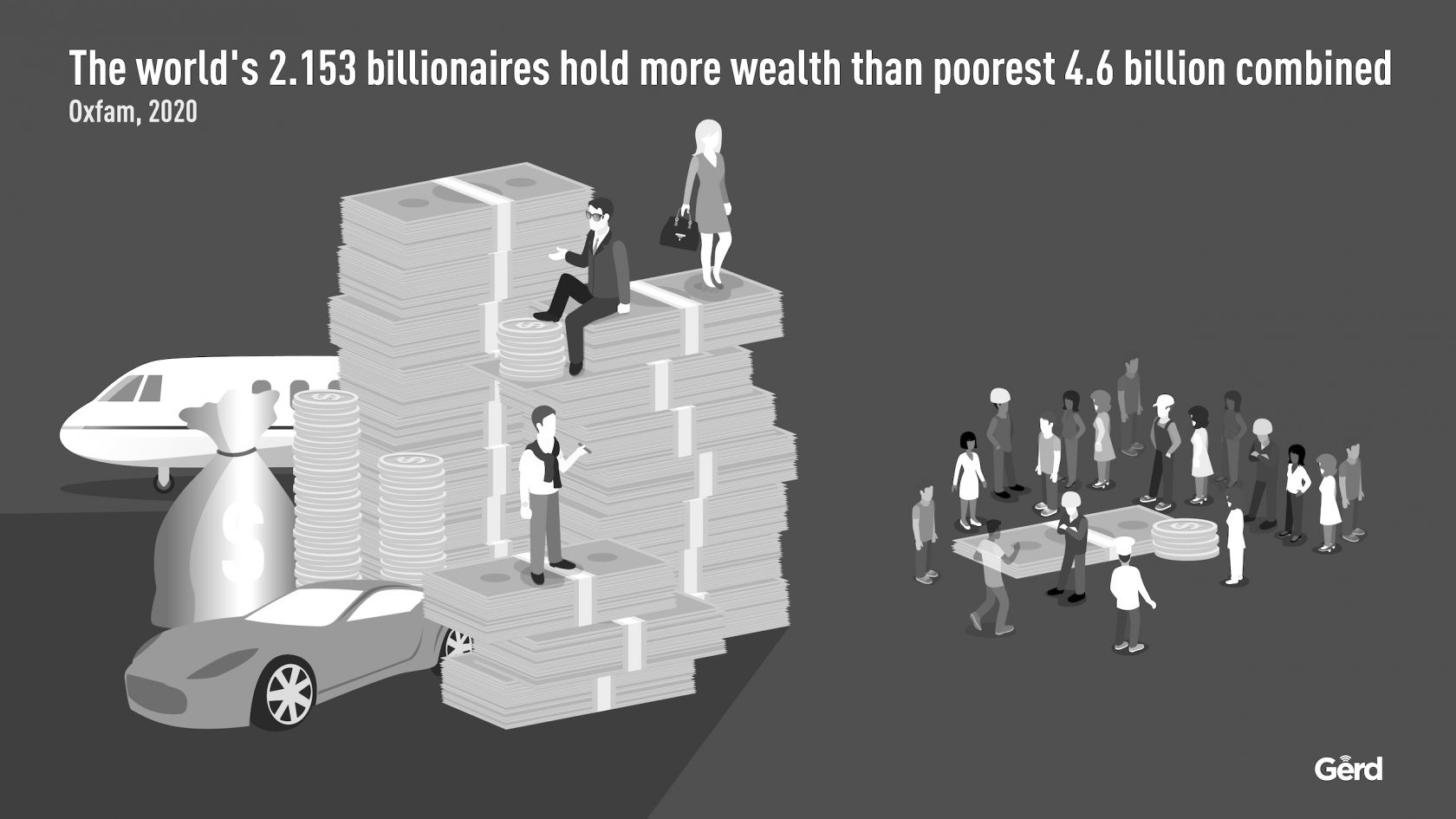
“If normal pay increase rates had remained unchanged during the past few decades, average American workers would be receiving $100,000 per year instead of the $50,000 they get today. In total, business moved roughly $50 trillion from the working class to the top one percent of society. A Rand study called it “The Great Wealth Transfer”. Read more via Fortune
“The focus on money that fueled the industrial past no longer makes sense today, when the critical resources needed to solve challenges have shifted from factories and machines to knowledge, innovation, and creativity.” Read more via Fortune
“While Americans have favored a pure form of capitalism, Japanese corporations serve society, Europeans use worker participation, the Nordic nations form civic associations, and China has state capitalism. Rather than “stakeholder capitalism”, “conscious capitalism”, or “ESG”, the new market system should be more accurately thought of as an “economic democracy,” a “corporate community,” or a “collaborative enterprise.” Ideally, Americans should strive for a “democratic enterprise.” Read more via Fortune
“My studies of social evolution have led me to believe that the current world order is unsustainable due to existential threats, such as climate change, pandemics, and inequality. Only a historic shift to a “global consciousness” can save civilization. Corporations are the most powerful institutions in the world, so this shift in economic consciousness could be revolutionary.” Read more via Fortune
Watch this video!
This episode was live-streamed on March 14, 2022. In this episode, Gerd delivered a 20 min presentation on ‘The Future of Democracy‘ followed by a live Q&A.
Download this video on Gerd’s Vimeo channel
Originally published on 21 March 2022. View the original post.
5. The Future of Democracy: Gerdtalks #5. The video and the slides (Futurist Gerd Leonhard)
2022-03-16
These days, democracy seems increasingly under fire – declining globally – and stability is threatened by autocrats. What’s next for Democracy?
This was the topic for GerdTalks episode 5. GerdTalks a new bi-weekly live-stream video show usually kicking off with Gerd’s 15-minute presentations followed by a live Q&A, with questions and comments directly from the audience, using Youtube and LinkedIn chat functions and Twitter comments.
The shows live-stream on 7 platforms including Youtube and LinkedIn and Twitter. Find more about the previous episodes and sign up for the next ones: www.gerdtalks.com
You can watch GerdTalks #5 on the Future of Democracy on the video below or download it from Vimeo here.
Listen to the audio version on SoundCloud, Apple Podcast, Amazon Podcast or Spotify
Here are some of the slides used on the show.
You can download the full slide deck used by Gerd on the show here.
Originally published on 16 March 2022. View the original post.
6. Join me for GerdTalks #5: The Future of Democracy! March 14 6pm CET Live-Stream
2022-03-10
These days, democracy seems increasingly under fire – Freedom House says it’s declining globally – and now, global stability and peace is severely threatened by the long-ruling autocrat in Russia. What’s next in Democracy?
Sign up for my live-streamed show next Monday March 14 6pm CET | 12 noon EST | 9am PST.
The Ukraine/Russia war has given me a painful reason to think deeper about the my main 2022 topic, The Good Future. While some autocrats seem hell-bent on destroying stability and ending the long-lasting peace in Europe, democracy appears to be in decline for the last decade, globally (read the Freedom House report, or browse my ‘GerdFeed’ links on democracy).
Where is this going? How can we rekindle democracy and fix what is lagging? What’s wrong with how we design and implement democracy, right now? And what’s the role of technology (like social media) in all this?
In my view, the Good Future is almost synonymous with Democracy – so this is a very big topic for me. I am preparing furiously for this event and would love your feedback / input until we meet for the show (just go here to send your stuff, or ping me via twitter using the #gerdtalks tag).
This is obviously a hugely challenging topic, especially given the current circumstances in the Ukraine. I am hard at work finding some good morsels and realisations to share with you. In the meantime, here are some teaser statements to get you thinking until we meet.
While on the one hand many autocrats and populists have hung on to and even expanded their positions during the past 2 years, 74% of people living in countries run by autocrats are severely disenchanted and dissatisfied (read more here). I think these sentiments will turn into action everywhere, in 2022. Things will probably get worse before they get better, though – and that’s the scary part.
Democracy isn’t an institution – it’s a practice, and it becomes stronger through use (Jeff Sparrow)
What I have been calling ‘The New Human Renaissance‘ (i.e. the rising importance of Humanness and HI – Human Intelligence, as opposed to machine intelligence / AI) will also propel a renaissance of democracy, imho.
I believe that one of the chief reasons for a decline in the overall well-being of democracy is the rise of algorithmic media, i.e. social media that emphasises bad news and spreads it very quickly using lousy, reductionist algorithms that are designed to deliver more eyeballs to advertisers. This needs to end: Social Media must be rebooted with HUMAN interests in mind.
We also must remember that democracy’s apparent ‘decline’ in the past 15 years coincided with a lot of tough challenges such as the 2008 global financial meltdown, the Syrian civil war, a global refugee crisis, a worldwide public health emergency, and now the first war in Europe since WWII. People have been through a lot, and it shows…
In this episode NEXT MONDAY March 14, I will first offer a 15 minute presentation on the future of democracy, and then I will take questions and comments from the audience using Youtube and LinkedIn comments (be sure to be logged in:)
The event will live-stream on 7 platforms including Youtube and LinkedIn and Twitter @gleonhard – not on Facebook:) You can also be notified on Youtube (just hit the bell:) or sign up on LinkedIn here
Watch the previous episode on “The Future of Work” below, and go to GerdTalks.com for more details on the series in general.
Originally published on 10 March 2022. View the original post.
7. Facebook: The Largest Autocracy on Earth (‘The Atlantic). Gerd’s high-lights
2021-10-07
“Facebook is acting like a hostile foreign power; it’s time we treated it that way.”
“Mark Zuckerberg, unlike Einstein, did not dream up Facebook out of a sense of moral duty, or a zeal for world peace. This summer, the population of Zuckerberg’s supranational regime reached 2.9 billion monthly active users, more humans than live in the world’s two most populous nations—China and India—combined. (…) This is plain to see in its single-minded focus on its own expansion; its immunity to any sense of civic obligation; its record of facilitating the undermining of elections; its antipathy toward the free press; its rulers’ callousness and hubris; and its indifference to the endurance of American democracy.”
Read more via ‘The Atlantic’
“Facebook is developing its own money, a blockchain-based payment system known as Diem (formerly Libra) that financial regulators and banks have feared could throw off the global economy and decimate the dollar. (…) Now, according to The New York Times, Facebook is considering forming a kind of legislative body, a commission that could make decisions on elections-related matters—political bias, political advertising, foreign interference. This would further divert scrutiny from Facebook leadership.”
Read more via ‘The Atlantic’
View my new playlist on the Future of Social Media
“Facebook’s rise is part of a larger autocratic movement, one that’s eroding democracy worldwide as authoritarian leaders set a new tone for global governance. Consider how Facebook portrays itself as a counterbalance to a superpower like China. Company executives have warned that attempts to interfere with Facebook’s untrammeled growth—through regulating the currency it is developing, for example—would be a gift to China, which wants its own cryptocurrency to be dominant. In other words, Facebook is competing with China the way a nation would.”
Read more via ‘The Atlantic’
“What could we do in return? “Socially responsible” companies could boycott Facebook, starving it of ad revenue in the same way that trade sanctions deprive autocracies of foreign exchange. In the past, however, boycotts by major corporations like Coca-Cola and CVS have barely made a ripple. Maybe rank-and-file Facebook employees could lobby for reform, but nothing short of mass walkouts, of the sort that would make the continued operation of Facebook impossible, would be likely to have much effect. And that would require extraordinary courage and collective action.”
Read more via ‘The Atlantic’
The Future of Social Media: Keynote for NEC Forum’21 PT
Watch this riveting keynote where I talk about how the social media industry already has quite a few parallels to the oil, gas and coal business: while private make huge profits from extracting the ‘oil’ (i.e. user data).
What kind of future do you want? #Futurist Gerd Leonhard comments on the future of #socialmedia (1)
NEW! Social Media Futures Playlist on Youtube
Watch short clips of Gerd’s interviews and keynotes on his NEW Social Media Futures Playlist on Youtube
Originally published on 7 October 2021. View the original post.
8. My new film “The Good Future”
2021-06-03
I just got back from beautiful Lanzarote where we were shooting my new film “The Good Future”. The wind was blowing in a typical Canary Islands fashion but thanks to the amazing team we still shot some really awesome footage.

Below is a brand-new trailer that gives you an idea where we are going with this – exclusive preview for my readers!
Why “The Good Future”? These days it seems that no matter where you look the future is not so bright: Hollywood and Netflix keep telling us dystopian stories, and news are presenting evidence of impending demise around the clock. We will have more pandemics, more climate disasters, more clueless CEOs and politicians, and more social unrest – and of course the robots will take our jobs before harvesting our bodies for energy.
But despite all of that there is hope! This film aims to tell the story of The Good Future. I believe in a future where the power of human ingenuity, science and technology solves our biggest problems. I also believe that humans are basically kind and capable of collaboration (read ‘human kind’ by Rutger Bregman! ) – even if they can be easily distracted:)
But we are running out of time because the future is arriving faster than we think. In fact it is already here, we just haven’t paid enough attention yet. Science fiction is becoming science fact. We are at a fork in the road. The next 10 years will bring more change than the previous 100 years.
We must make the right decisions now if we want a good future.
Here is a brand-new presentation on ‘The Good Future’ using the pretty cool mmhmm app
Watch more on “the Good Future” on Vimeo
Originally published on 3 June 2021. View the original post.
9. Announcing The Fork In The Road Project – Please Join Us!
2021-03-06

Today, I am delighted to invite all interested readers, friends, clients and fellow futurists to consider and join an important new initiative. Together with 2 other esteemed longtime friends, futurists and co-initiators, Glen Hiemstra and David Houle, I recently started an exciting new project named after Buckminster Fuller’s meme “The Fork in the Road“. The idea of The Fork In The Road Project is to use bold futuristic narratives, deep skills in foresight and unique story-telling powers to dramatically accelerate the global debate on the following 4 issues (and others, tbd):
- Dealing with the climate crisis so that humans and all life can continue to flourish
- Designing new economic and political frameworks, based on sustainable principles
- Managing exponential, scientific and technological progress
- Governing human enhancement, longevity, and human genome editing so that progress continues while consequences are carefully considered
Many people have asked why we would launch something like this when we already have the likes of the WEF, the Millennium Project and of course the U.N. driving very similar agendas. The answer is that we believe that, as experienced futurists, authors, speakers, visionaries and story-tellers, we can add a lot of firepower to increasing the urgency of these issues, while providing a hopeful and positive outlook on how we can actually create ‘the good future’.
On that note, one of our key memes is also derived from Buckminster Fuller: “We will have all the tools (science and tech) – we just need to have the telos (will, purpose, wisdom)”. We believe that we can make a fundamental difference in this regard, and intend to do so by publishing thoughtful articles, creating videos, films and other media, and organizing virtual as well as real-life events and ‘Forker’ experiences.
You can read the draft manifesto here and check out the latest blog posts here on Medium. Most importantly, however, your support as an official signatory would be a great contribution, right now. No commitment in terms of time-spent is required at the moment, all you need to do is to read and – if in agreement – sign the manifesto.
And yes, it not just be 3 older white guys at the helm – we have already gathered many other signatories specifically with a view on diversity and inclusion – and we will publish our lists shortly, here.
Originally published on 6 March 2021. View the original post.
10. 2021 will bring the Great American Pivoting
2020-08-10
In 2021, with a newly empowered and decidedly more coherent political leadership, America will make an astonishing turnaround.

Winston Churchill is often quoted as saying “You can always count on the United States to do the right thing – after they have tried everything else”.
The last 4 years in the United States: a certifiable nightmare
It’s safe to say that in the past 4 years the United States under the ‘leadership’ of President Trump have indeed tried pretty much any and all wrong options, with disastrous consequences nationally, regionally and globally – many of which have recently been brought into sharp focus by the Covid-19 crisis. What was already a tough challenge before this crisis (such as access to affordable healthcare for low-income groups, or the brutal economic inequality that has ballooned in the last 20 years, see the stats below), has become glaringly obvious now.
The Corona crisis is bringing out the best in us and the worst in us – and in the U.S. the worst has long been the seriously underfunded and fragmented public healthcare system, rampant inequality (economically, socially and racially), the dismissive attitude and incoherent action on global warming, and a savage form of corporate capitalism that is corroding civil society and will clearly be utterly ill-suited for the future.
Dramatically accelerated by covid-19, the U.S. is at a pivot point
As the breaking-point is being reached and an ever-deepening crisis ensues, I believe the U.S. is at a unique-in-its-entire-history pivot point where some fundamental change becomes possible (and very likely, as well).
*For some more context on these observations, be sure read my ’12 bullets’ post from April 4, 2020: “Post-Corona, ‘strong-man’ and populist politicians harking back to a vanished past will be ousted or simply ignored, and a new generation of foresightful leaders (millennials and women) will take their place”
The U.S. is now entering a phase of dramatic PIVOTING; an utter change of direction that will define its future for the next decades to come, and that will quickly impact the global world order.
The primary trigger of this coming existential pivot is, beyond any doubt, the disastrous handling of the covid-19 crisis by President Trump and his administration. Secondary triggers include climate change, inequality and the emergence of a new form of capitalism and a new economic ‘stakeholders not just shareholders‘ – logic.
Despite (or even because?) of the misery of the past 4 years, the U.S. still has what it takes to make an astonishing comeback after the 2020 election – which I believe will result in a Democrat as U.S. President (with a crafty female vice-president, no less!) as well as a democratic-party-led U.S. Congress. Let’s not forget that more than any other nation in the world (yes, including China) America is still all about The Future, and much of that future is still mostly about Technology (but read more on the coming shift to re-humanization below).
It is impossible as well as ill-advised to ignore the tremendous pioneering spirit and entrepreneurial energy that still prevails in the U.S., and to forget the astounding capacity of the American people to very quickly overcome serious setbacks and wicked challenges while reinventing themselves. My personal experience after 15 years of living in the U.S. (see below) and my countless keynote appearances there, after I moved back to Europe, have taught me again and again that Americans will always pioneer at pretty much any cost; they will always look for something newer, faster and better, and they will probably never cease to ‘explore new frontiers’. We should never underestimate American ingenuity.
The ‘Future Mindset’
This ‘American Mindset’ is also a Future Mindset that us Europeans still cannot really fathom: we are all about the past and maybe even the present, but the Future….? Looking at the future is just too audacious, too dashing and too risky. In 2011, the German chancellor Helmut Schmidt was famously quoted as saying that “people with visions should go and see their doctor” (*sure, this has changed a lot in the past decade, and yes I have great hopes that ‘The United States of Europe’ will become more future-ready).
But VISION and IMAGINATION is precisely where America excels and what will drive this Great American Pivoting in 2021. And in America, vision is usually expressed in technological shapes.
Big Tech | Big Media | Big State | Big Health | Big Green
The covid-19 crisis has already brought us ‘Big Tech, Big State and Big Health’, to which we will soon add ‘Big Media and Big Green’ (and some would argue, Big Debt).
In every single one of the 5 ‘Bigs’, American companies enterprises keep dominating, and American investors keep funding startups that people from all over the globe keep wishing to work for. *Yes, China is increasingly a force to be reckoned with, as well. One could argue it will eventually be a case of state capitalism vs corporate / venture capitalism…but more about that in another piece 🙂
BUT: To really matter in the future, America must also go beyond technology – and start to embrace Humanity
Imho, America will not rise again if it only banks on technology (specifically, artificial intelligence). Rather, it must also start investing in Humanity in order to contribute to tackling the human issues that deeply concern everybody on this planet – because even the most amazing technology will never solve social, cultural or political challenges. Humans are NOT algorithms, trust is the currency (not data), and happiness is not a download.
In fact, great technology often makes human challenges worse because technology is a driver of ruthless (and mindless) efficiency. As evidenced in so-called social media, technology can make things extremely efficient, yet without a constant human fine-tuning of purpose, values and ethics (i.e the why not the how) it can also go terribly wrong. The textbook example is Facebook of course.
Social media has morphed from a blessing (some would still say) to a curse in less than 10 years – not because the algorithms weren’t good enough, but because they have become TOO GOOD. Too much of a good thing can be a very bad thing, indeed, and ‘too much technology’ is now a constant theme around the globe. As I like to say “Technology is not what we seek but how we seek”.
⚡️ A “Pivoting America” will need to invest equally in humanity than it does in technology, and it must embrace sustainable capitalism
Here is what that would mean:
1) Rebooting the public healthcare system so that it is sufficiently funded, and can deal with current and future healthcare crises. Finally and irrevocably provide affordable healthcare to everyone. Divert funding from military and defence, fairly tax the super-earners, billionaires and the technology giants. Fund many new jobs in public health, social work and of course in science and research. Make sure the corona vaccine (whenever that will be a reality) is not just going to be a gold-rush for big pharma but a public good available to everyone. Remember that the coming convergence of technology and biology (biotech) will super-charge economic progress in the next 2 decades – this opportunity should not be left to China.
2) Realising that covid-19 is only a test-run for climate change and effective measures on global warming. The U.S. could catalyse the creation of millions of new jobs (and 1000s of startups) by relentlessly shifting to renewable energy and implementing a Green Deal. A Green Deal (however you define it) is not only imperative for our survival, it could also create Millions of new jobs, as well. Keep in mind that many things that we thought were ‘impossible’ before (such as the government telling us to stay at home, or paying us a kind of basic income during this crisis) have already become the new normal. So why not tackle other seemingly ‘impossible’ concepts such as carbon taxes (for airline travel, and meat) and mandatory climate emergency measures right now, as well? Tough problems are calling for tough solutions.
-
The End of Oil is a certainty -
The Carbon Tax is coming
3) Rethinking education. America doesn’t (just) need more STEM graduates, technological geniuses or savvy entrepreneurs: it needs more HECI-centric leaders – humans that are steeped in humanity, ethics, creativity and imagination. It needs more ‘experts in humanity’, more emotional intelligence and above all more ‘Menschlichkeit’ (מענטש, mentsh, mensch, ‘human being’ means “a person of integrity and honour). To be ready for the future, America’s kids and students need to learn how to be better humans, first and foremost. *Well, of course, that’s not just true for America.
As computers become increasingly smart or ‘artificially intelligent’ or ‘powered by AI’, American schools, colleges and universities must strengthen their students’ HI (human intelligence). For it is those human-only tasks that will be at the core of our future jobs. Our ultimate job… is to be HUMAN! *Watch my latest film on HowTheFutureWorks for more on this topic.
4) Governing and regulating exponential technological progress (and the companies that are fuelling it) in order to protect what I like to call the ‘androrithms’, those inherently human traits that algorithms will and probably should never understand: emotions, agency and consciousness, privacy, mystery, serendipity, creativity, intuition, imagination. The recent U.S. congressional hearings (watch this video, and this one, as well, for some good chuckles:) questioning the CEOs of Apple, Facebook, Amazon and Google have shown that maybe, finally, some law-makers are waking up to the fact that ‘this can not continue’ (verbatim quote from Chairman Cicilline) and that a balance of power between the tech companies and the public is urgently needed.
5) Redesigning capitalism to encompass 4 dimensions: people, planet, purpose and prosperity. A new stock market (let’s call it ‘SUSDAQ’ …akin to NASDAQ) could be created where companies and ‘brands with purpose’ that follow this quadruple bottom-line would be listed (including those that are already on a similar agenda, today, such as Patagonia, Zappos and Unilever). Al Gore called this ’sustainable capitalism’ in 2011 and I think this meme remains suitable. What if every American CEO would be compensated based on his/her performance in these 4 categories ?
I believe that a new 2021 U.S. administration would be well advised to embrace the duality of Technology and Humanity, and to set an entirely new agenda for the future of America – and my gut feel is that this is already percolating.
The Future is better than we think.
Some personal context: Gerd and America
I studied in the US (Berklee College of Music, Boston, 1985-87), and lived in the Bay Area for more than 15 years, both of my kids are American citizens, and (before covid-19 grounded me, and catapulted me into a new virtual world) many of my biggest speaking engagements were in the US or for US companies. In fact, I have to admit that even after 18 years in Switzerland I often still feel more ‘American’ than Swiss or German.
Originally published on 10 August 2020. View the original post.
11. Must-watch summary of US congress hearing on tech regulation #digitalethics (via TheVerge)
2020-07-30
Finally some tough questions from US Congress. Watch this video!
“CEOs of Amazon, Apple, Facebook, and Google testified before Congress in the tech antitrust hearing. Lawmakers squared off with the chief executives of the tech industry’s four most powerful players. Even though each company is under antitrust scrutiny for different reasons, the committee used this week’s hearing to point out similarities between all four, making the case for future regulatory reform…” Learn more (The Verge): https://bit.ly/3fdXykb
Technology & Humanity: Our Future. Keynote Speaker Gerd Leonhard SIBOS Innotribe 2019 #digitalethics

Ethics is what defines us (not tech)
From my book www.techvshuman.com
1) Embrace technology but don’t become it. Radical human augmentation via technological means will be a downgrade not an upgrade. Technology is exponential but humans are linear (and should remain so)
2) Whatever can be digitized, automated and virtualized, will be – and anything that cannot be digitized or automated will become extremely valuable (i.e. our uniquely human qualities).
3) Exponential technological change is #hellven (heaven and hell at the same time). Will we be tool-makers or tool-made?
4) Technology does not have ethics but our society depends on them. Just because we can does not mean we should.
Tech is not WHAT we seek….
5) Technology is not what we seek but how we seek: the tools should not become the purpose. Yet increasingly, technology is leading us to ‘forget ourselves’.
6) Efficiency should never become more important than humanity, because not everything that can be automated, should be – and happiness cannot be automated.
7) Humanity will change more in the next 20 years than the previous 300 years (yes, seriously). It’s time to decide what we want to be.
8) To safeguard humanity’s future, we must invest as many resources in human happiness and the continued flourishing of humanity as we do in developing new tools and technologies. Exponential technologies need exponential humanity; every great algorithm needs a great androrithm!
9) We are at the pivot point of exponential and combinatorial technological evolution: all around us, science fiction is becoming science fact – and the future will increasingly arrive gradually then suddenly. We need to proceed with a very wise combination of precaution and pro-action.
10) The immediate future clearly is all about technology yet the bigger future lies in transcending it
Originally published on 30 July 2020. View the original post.
12. The U.S. Is Lagging Behind Many Rich Countries. These Charts Show Why (must-read via the NYT)
2020-07-08
“The United States is different. In nearly every other high-income country, people have both become richer over the last three decades and been able to enjoy substantially longer lifespans. But not in the United States. Even as average incomes have risen, much of the economic gains have gone to the affluent — and life expectancy has risen only three years since 1990. There is no other developed country that has suffered such a stark slowdown in lifespans” READ MORE
IMHO, however, I think we are going to see an ‘AMERICAN RENAISSANCE’ in 2021, with a new. democratic president and even a democratic majority in the US Congress…?

Originally published on 8 July 2020. View the original post.
13. New film: The Great Transformation: Futurist Gerd Leonhard on how #covid19 will impact our immediate future
2020-04-02

New short film by Futurist Gerd Leonhard: The Great Transformation – life after Covid19
There is a time before Corona, and there is a time after Corona. We are entering what I call *The Great Transformation*. Huge challenges and many hardships are certain yet this total reset will also catalyse many new beginnings. (Watch the film directly on Youtube, or click PLAY below)
To quote Milton Friedman “Only a crisis – actual or perceived – produces real change. When that crisis occurs, the actions that are taken depend on the ideas that are lying around”
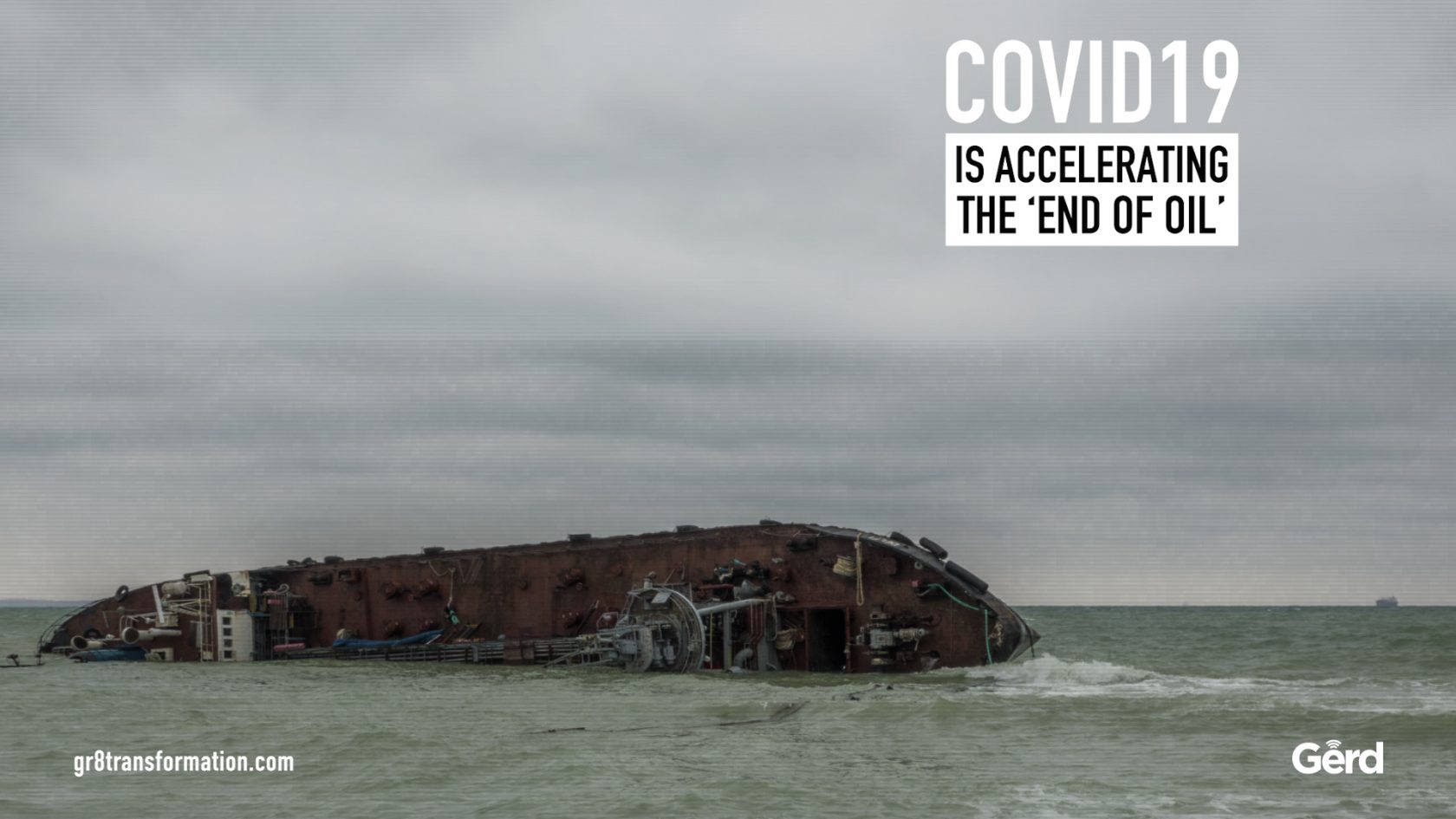
The key messages: Business as usual is over. This crisis is a test of our humanity. Scientific hyper-collaboration is now the new normal. The ‘United States of Europe’ are nearing. Politicians that have proven useless will be quickly ousted. The crisis will vastly accelerate the end of oil. Business travel will never be the same. Remote-everything is here, now, and won’t go ‘back to normal’. Technology is the winner – but must be used wisely. Collaborate. Re-invent. Take care of each other. Be HUMAN.
Read more on what to expect this year, here.
Download this film
via Wetransfer. Re-use is allowed as long as proper credit is given.
Download the Whatsapp version: WA FINAL Gerd-Leonhard-Futurist-Post-Corona-Future-Light
Be sure to also watch my film HowTheFutureworks
Originally published on 2 April 2020. View the original post.
14. Covid-19 is nature’s wake-up call to complacent civilisation | George Monbiot
2020-03-25
Covid-19 is nature’s wake-up call to complacent civilisation
Really thought-provoking read by George Monbiot “We have been living in a bubble, a bubble of false comfort and denial. In the rich nations, we have begun to believe we have transcended the material world. The wealth we’ve accumulated – often at the expense of others – has shielded us from reality. Living behind screens, passing between capsules – our houses, cars, offices and shopping malls – we persuaded ourselves that contingency had retreated, that we had reached the point all civilisations seek: insulation from natural hazards.”
Covid-19 is nature’s wake-up call to complacent civilisation | TheGuardian
Originally published on 25 March 2020. View the original post.
15. I sure hope the future of keynote speaking does not look like this – but conferencing is definitely moving ONLINE now!
2020-03-05

If you can’t or won’t travel right now – try this new Online Conferencing format
COVID19 is becoming a major disaster for event and conference organizers, and of course for keynote speakers like myself. Pretty much every event is being cancelled right now. Maybe this is a good time to reboot the idea of doing entire events 100% online – I have suggested this many times in the past but most clients and their agencies didn’t like the idea. It’s just not good enough, not personal enough, not real enough…! All of that us true, of course – but as we are now facing severe travel reestictions and public gathering bans (and soon, a steep carbon tax on flying, as well), having conferences 100% online is re-emerging as a viable alternative. So, March 12 at 4pm will see our inaugural conference.
(I certainly hope I won’t have to wear my futuristic face-mask (see background pic) for this event:)
As public events are being banned and traveling is out…
We’re using Zoom.us for this event, and it has some pretty amazing conferencing tools, for large audiences. I will be the host and presenter but we will also draw from a large audience of pretty interesting attendees (which can be promoted to panelists and contributors anytime). We will also have some live debates, q&a and polling; and the entire event will be live-streamed on my YouTube channel. It should be amazing. Sign up now – there’s only 15o seats left (and yes… this first edition is free).
Click the PLAY button below to see what my online talks look like.
Event Topic: Sustainability & the Future of Capitalism
I firmly believe that Sustainable will be the new Profitable, and that businesses and organisations that get on board early will have much better chances of striving in this new era. I will present and discuss the following topics:
1. Carbon Taxes: We must embrace the reality that wide-ranging and disruptive carbon taxes are pretty much inevitable…
2. The Quadruple Bottom Line: The much debated shift to shareholder- (not just shareholder-) value is likely to reboot stock-markets around the world in the next decade
3. Responsible Investing: 2020 marks the beginning of a New Renaissance as responsible investing – and rapid divestment from fossil fuels…
4. The humanly sustainable use of technology: Too much of a good thing can be a very bad thing
Originally published on 5 March 2020. View the original post.
16. Must-read report by PEW Research: Experts Say Digital Disruption Will Hurt Democracy
2020-02-23
Many Experts Say Digital Disruption Will Hurt Democracy
I am diving into this new PEW report right now – really important stuff as I am preparing for my new 2020 Keynote Topic “The Future of Democracy”.
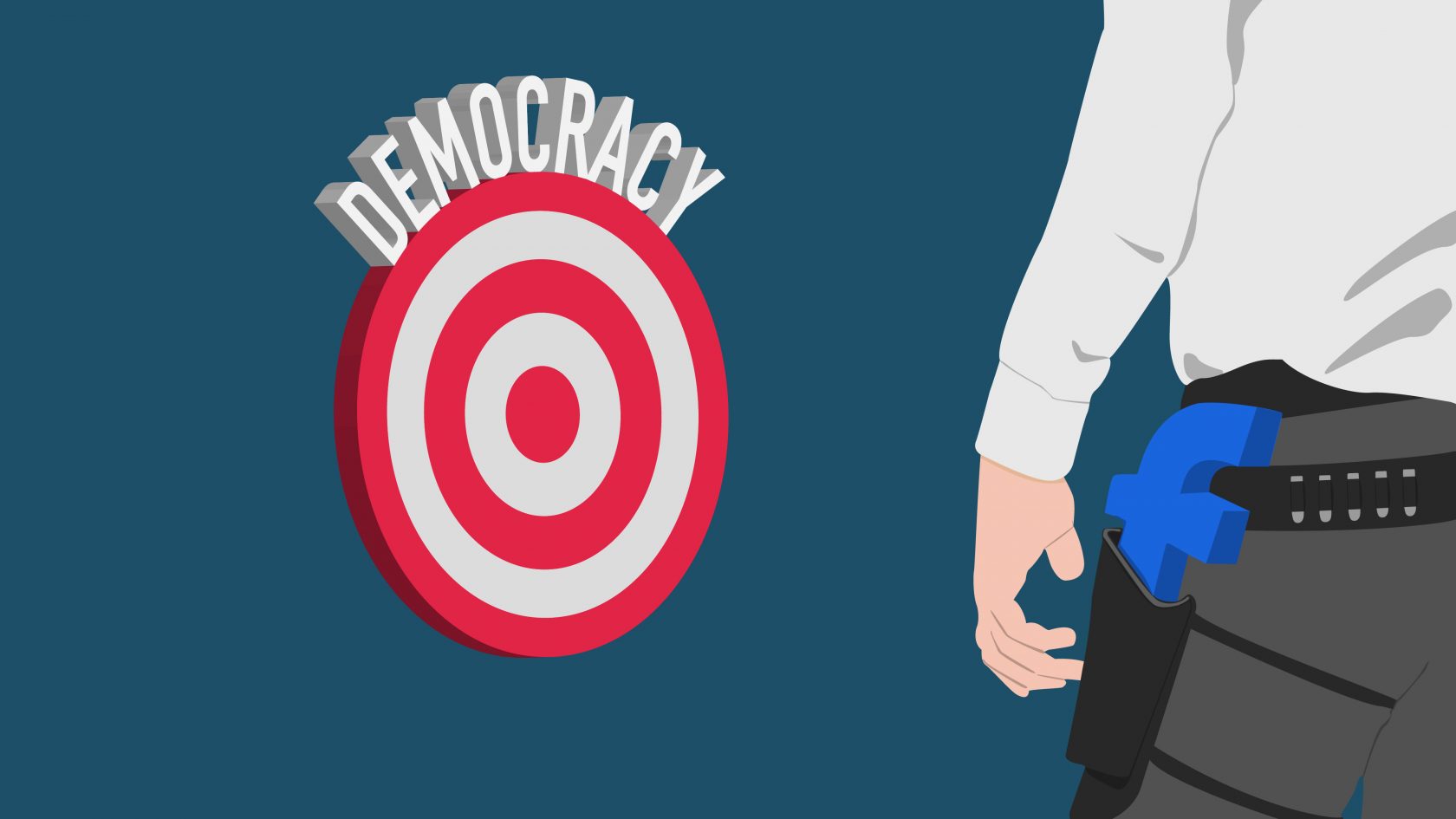
“Many Tech Experts Say Digital Disruption Will Hurt Democracy. About half predict that humans’ use of technology will weaken democracy between now and 2030 due to the speed and scope of reality distortion, the decline of journalism and the impact of surveillance capitalism. A third expect technology to strengthen democracy as reformers find ways to fight back against info-warriors and chaos. BY JANNA ANDERSON AND LEE RAINIE”. Read more here.
Originally published on 23 February 2020. View the original post.
17. Douglas Rushkoff’s must-read on ‘technology out of control’ – couldn’t have said it better myself!
2020-01-11

Douglas Rushkoff’s must-read on technology out of control
“We’ve spent the last 10 years as participants in a feedback loop between surveillance technology, predictive algorithms, behavioral manipulation and human activity”
Read more at the Guardian (Douglas Rushkoff)
“The quest for exponential returns may have fueled the development of extractive and addictive technologies, but the cultural phenomena they gave birth to now have a life of their own”
Read more at the Guardian (Douglas Rushkoff)
“We can no longer come to agreement on what we’re seeing, because we’re looking at different pictures of the world. It’s not just that we have different perspectives on the same events and stories; we’re being shown fundamentally different realities, by algorithms looking to trigger our engagement by any means necessary…We are living in increasingly different and irreconcilable worlds. We have no chance of making sense together. The only thing we have in common is our mutual disorientation and alienation”
Read more at the Guardian (Douglas Rushkoff)
“The digital media environment is a space that is configuring itself in real time based on how the algorithms think we will react. They are sorting us into caricatured, machine-language oversimplifications of ourselves. This is why we saw so much extremism emerge over the past decade. We are increasingly encouraged to identify ourselves by our algorithmically determined ideological profiles alone, and to accept a platform’s arbitrary, profit-driven segmentation as a reflection of our deepest, tribal affiliations”
Read more at the Guardian (Douglas Rushkoff)
“We are promoting a spectator democracy on digital platforms, and, in the process, we are giving life to paranoid nightmares of doom and gloom, invasion and catastrophe, replacement and extinction. And artificial intelligence hasn’t even arrived yet”
Read more at the Guardian (Douglas Rushkoff)
“We have surrendered to digital platforms that look at human individuality and variance as “noise” to be corrected, rather than signal to be cherished. Our leading technologists increasingly see human beings as a problem, and technology as the solution – and they use our behavior on their platforms as evidence of our essentially flawed nature”
Read more at the Guardian (Douglas Rushkoff)
so very true!
Read more at the Guardian (Douglas Rushkoff)
Originally published on 11 January 2020. View the original post.
18. A key paradigm in my work as a Futurist: Practical Wisdom
2020-01-10
Practical Wisdom
PRACTICAL WISDOM (phronesis) is a key objective in my work as a futurist. Here are some explanations on what it means:
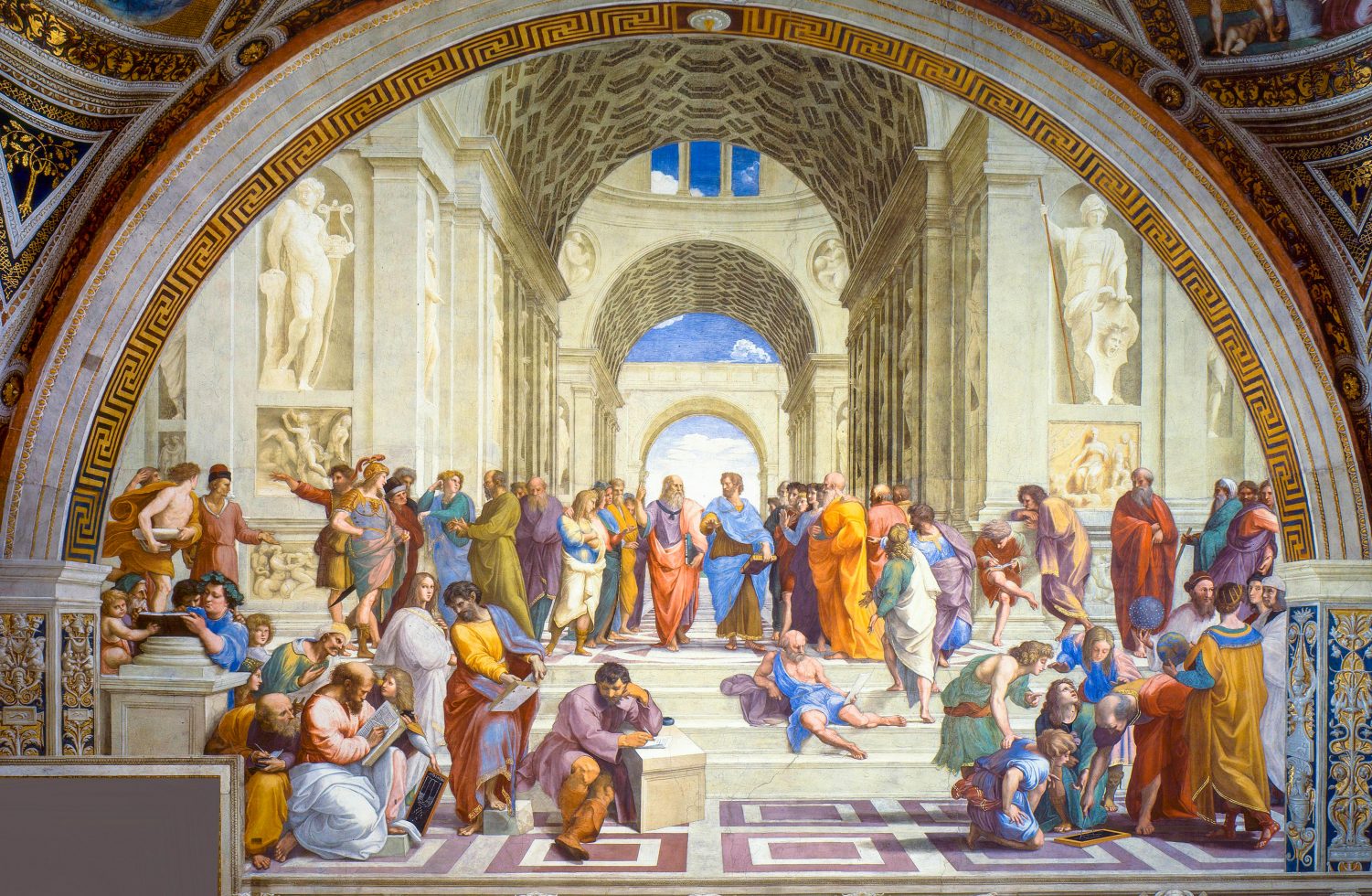
“The Greek philosopher Plato believed that wisdom was theoretical or abstract. Aristotle, his pupil, disagreed and said that wisdom was available to all, a kind of moral compass that guides our thinking and behavior… To champion human happiness, to flourish, Aristotle believed that wisdom was not for theoretical debate but for practical application. Barry Schwartz and Kenneth Sharpe, authors of Practical Wisdom: The Right Way to Do the Right Thing, distilled Aristotle’s ideas on virtues and practical wisdom and how it applies to our lives” Read more here
It’s a MORAL SKILL
What makes a WISE PERSON
- A wise person knows the proper aims of the activity she is engaged in.
- A wise person knows how to improvise, balancing conflicting aims and interpreting rules & principles
- A wise person is perceptive, knows how to read a social context, and knows how to move beyond the black-and-white of rules
- A wise person knows how to take on the perspective of another—to see the situation as the other person does and thus to understand how the other person feels
- A wise person knows how to make emotion an ally of reason, to rely on emotion to signal what situation calls for, and to inform judgement without distorting it.
- He can feel, intuit, or ‘just know’ what the right thing to do is, enabling him to act quickly when timing matters. His emotions and intuitions are well educated.
- A wise person is an experienced person. Practical wisdom is a craft and craftsmen are trained by having the right experiences.
Wisdom is not ‘black or white’
“These sort of quandaries don’t have pat, one-size-fits-all answers. Good rules might be useful as guides as we try to manage these multiple aims, but they will never be subtle enough and nuanced enough to apply in every situation. Aristotle recognized that balancing acts like these beg for wisdom, and that abstract or ethereal wisdom would not do. Wisdom has to be practical, because the issues we face are embedded in our everyday work” More here
Originally published on 10 January 2020. View the original post.