Here is a Decadal Reality Check: My 2016 Forecasts, Observations and ‘Predictions’ vs. the current, 2026 Reality: A side-by-side analysis of the hits, misses, and split decisions from Technology vs. Humanity, published in 2016.
***I used various AI models to do the analysis and in many cases the AI could not understand the difference between my own forecasts, or when I quoted other people’s forecasts – this is obviously a tough challenge – therefore please look at the results as at least partly obfuscated:) Update to follow!
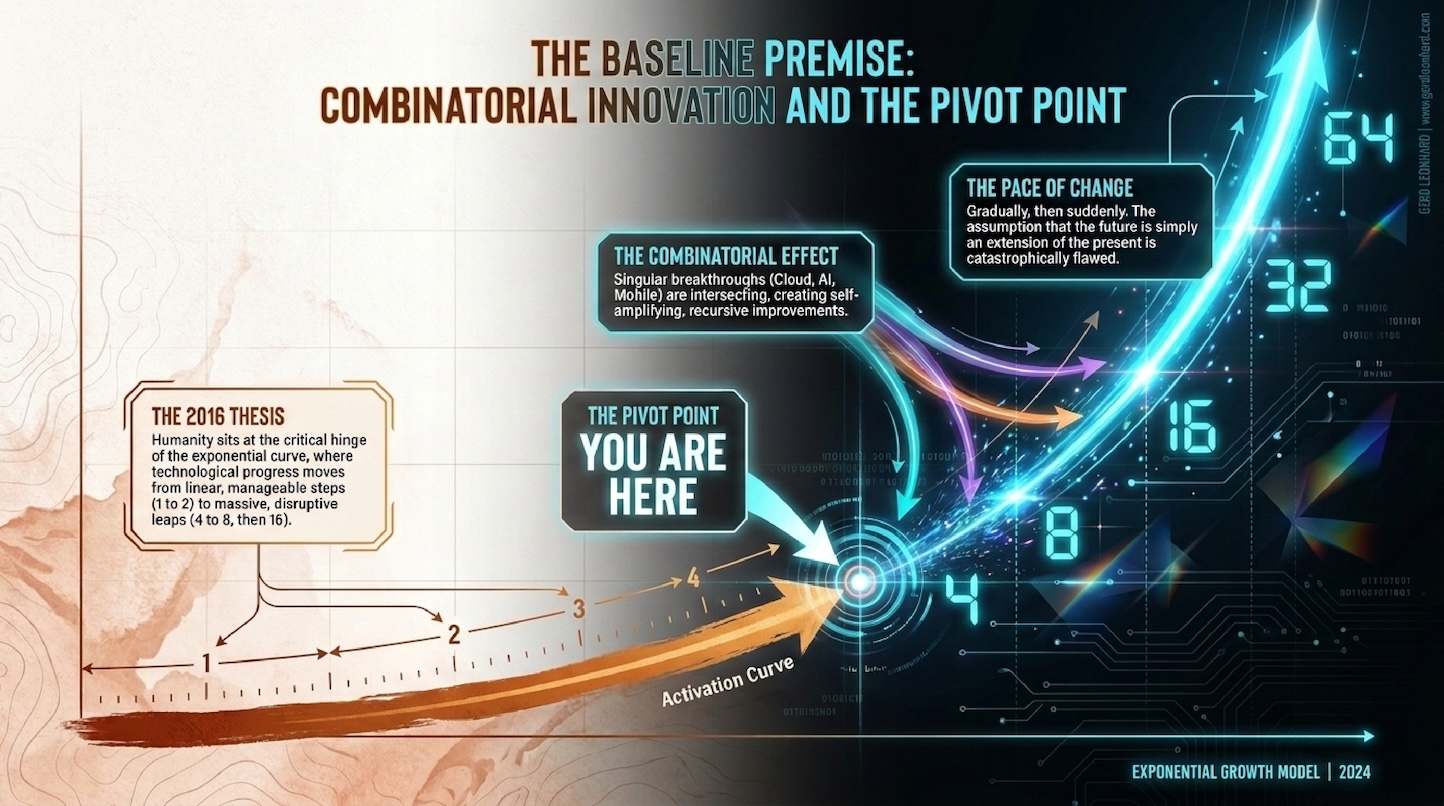
The Exponential Premise was correct – until now:) Gerd’s 2016 warning that humanity would change more in the coming 20 years than in the past 300 years, driven by the convergence of the “Megashifts.”
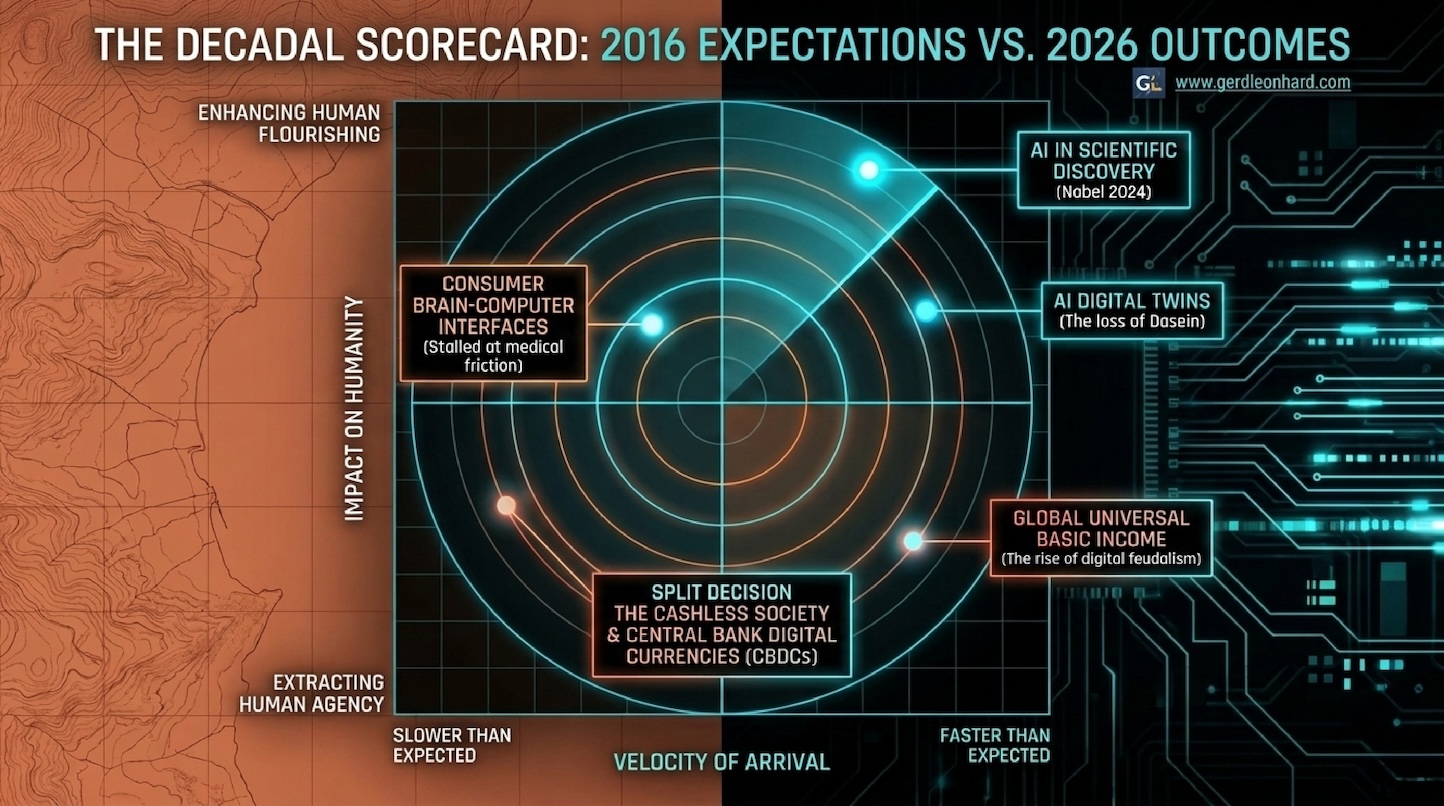
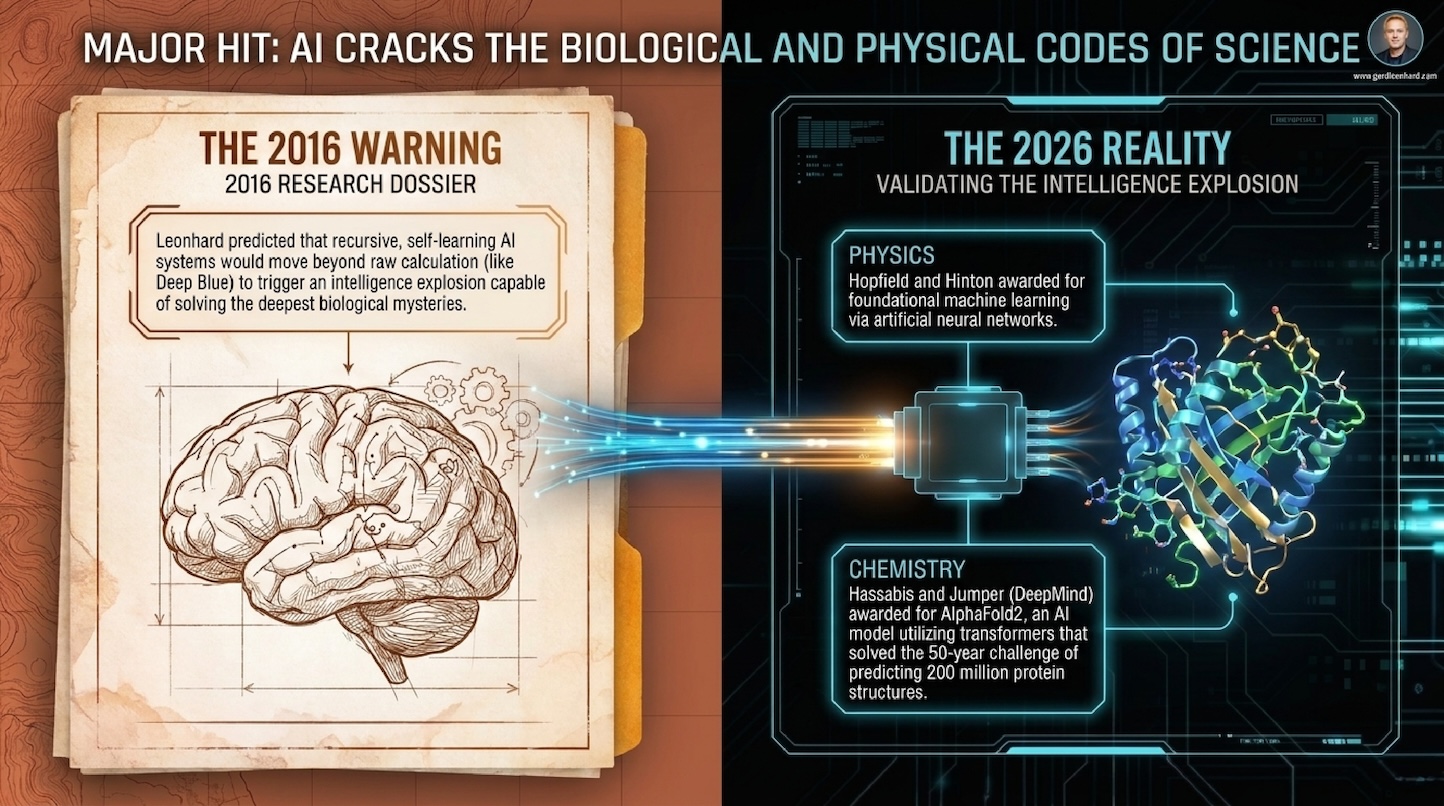
MAJOR YES — AI Dominates Scientific Discovery
The 2016 Prediction: Gerd forecast that AIs would routinely outpace human scientists in discovery and research. The 2026 Reality: Fully realized. The historic 2024 Nobel Prizes marked AI’s coronation – with Physics awarded for neural networks (Geoffrey Hinton) and Chemistry awarded to Google DeepMind (AlphaFold) for solving the 50-year-old protein folding problem.
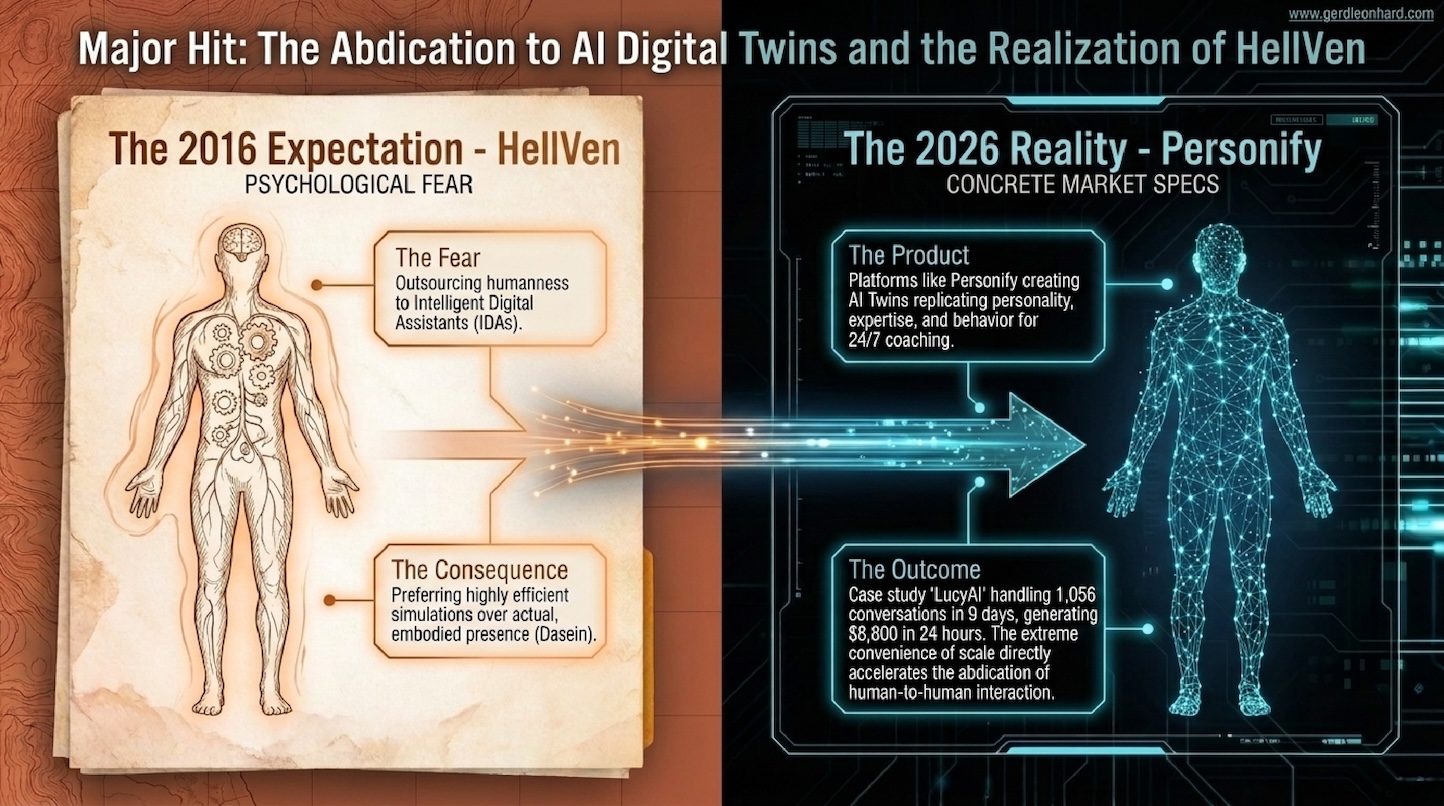
MAJOR YES — The Rise of the “AI Twin”
The 2016 Prediction: “HelloMe” personal cloud clones would exist by 2022 to simulate conversational styles, emotions, and thoughts. The 2026 Reality: Spot on. Interactive AI Digital Twins are a booming industry in 2026. Services like Delphi and Personal.ai scale expert coaching, and CES 2026 prominently featured interactive employee clones (like IgniteTech’s “MyPersona”) replicating real voices and mannerisms.
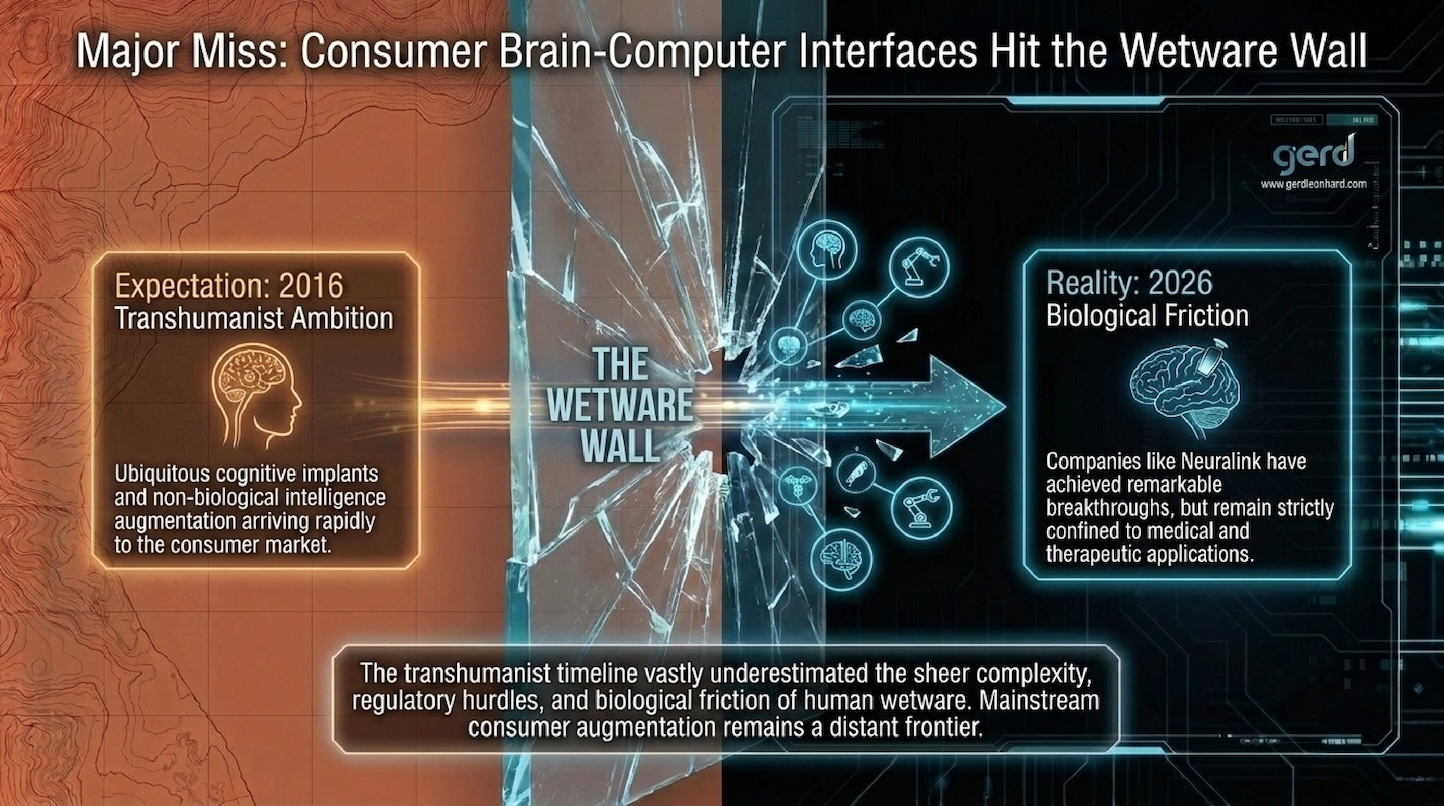
NOT REALLY — Brain-Computer Interfaces (BCIs) Go Consumer
The 2016 Prediction: Brain implants and cognitive cloud extensions would start expanding globally by 2024. The 2026 Reality: Stalled. While Neuralink has achieved clinical marvels (its first human trial with Noland Arbaugh in 2024 expanded to 12+ stable clinical participants in 2026), BCIs remain strictly medical devices for restoring motor and speech functions, not mass-consumer cognitive upgrades.
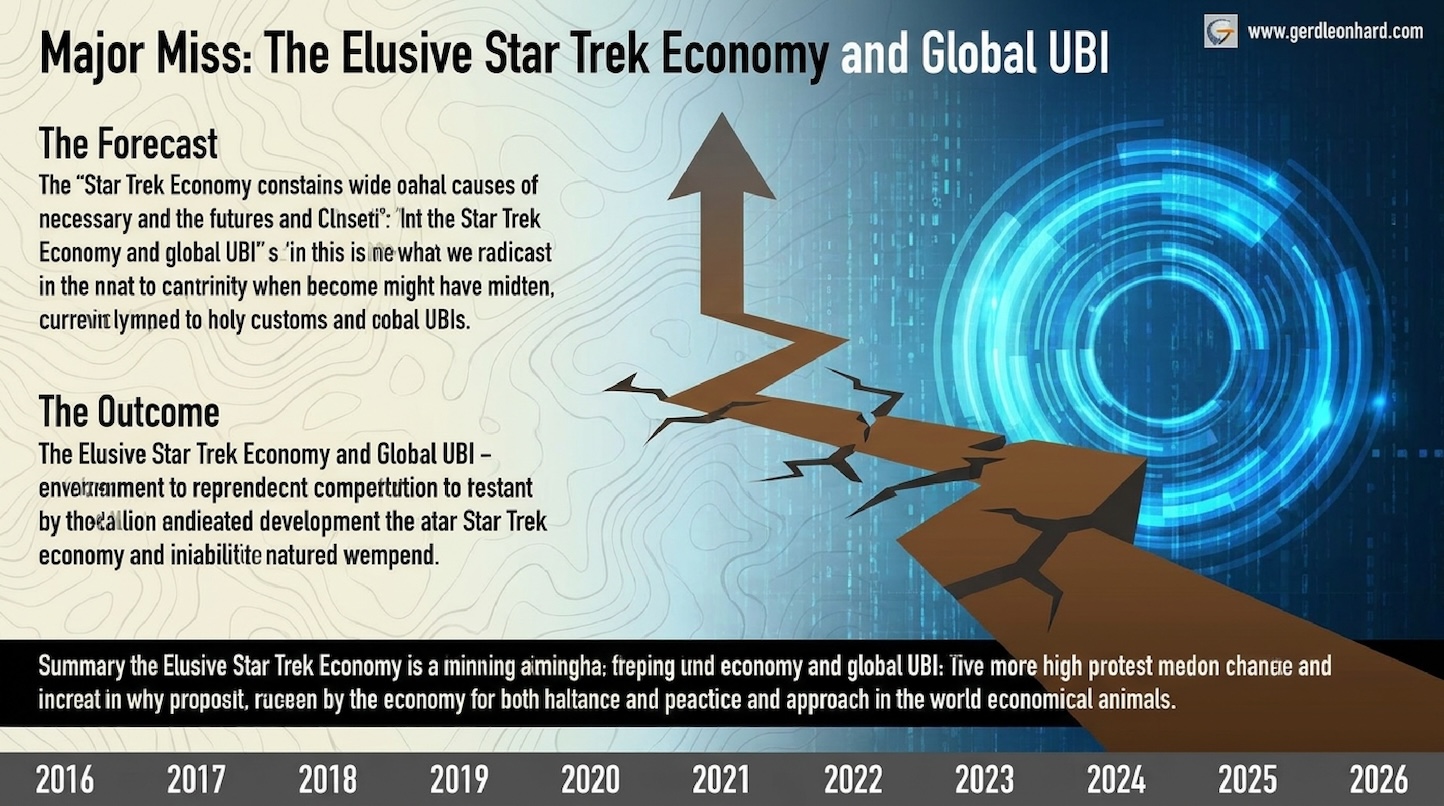
TOO OPTIMISTIC / NOT YET — Universal Basic Income (UBI) as a Global Standard
The 2016 Prediction: Job automation would force UBI to be fully active in at least 12 countries by 2026. The 2026 Reality: Grounded. No nation has implemented a permanent, truly universal basic income. Switzerland and Finland’s pilots did not become national law. The closest milestone is the European Citizens’ Initiative registered in July 2026, currently trying to gather 1 million signatures across 7 member states just to oblige a commission review. Related: UBC advances.
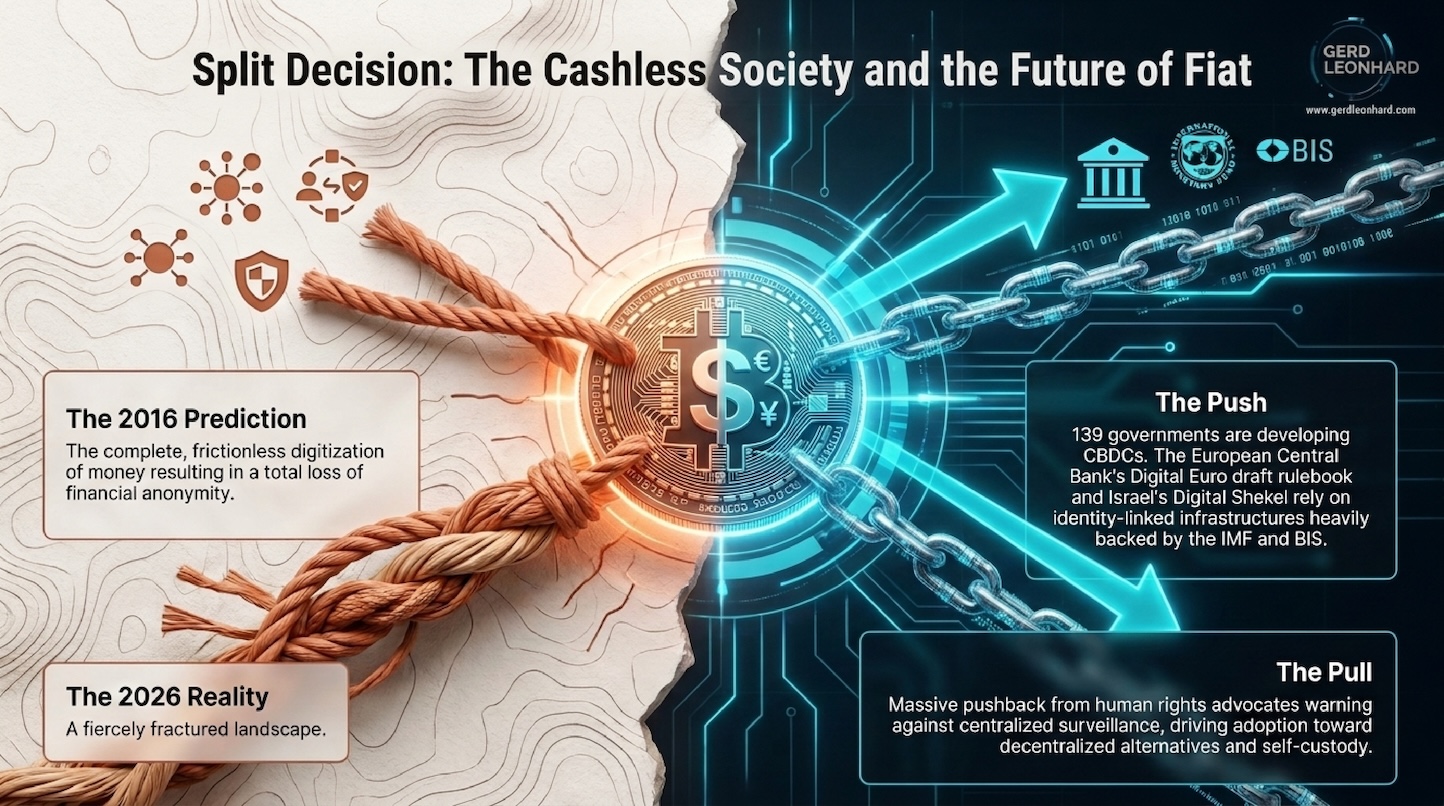
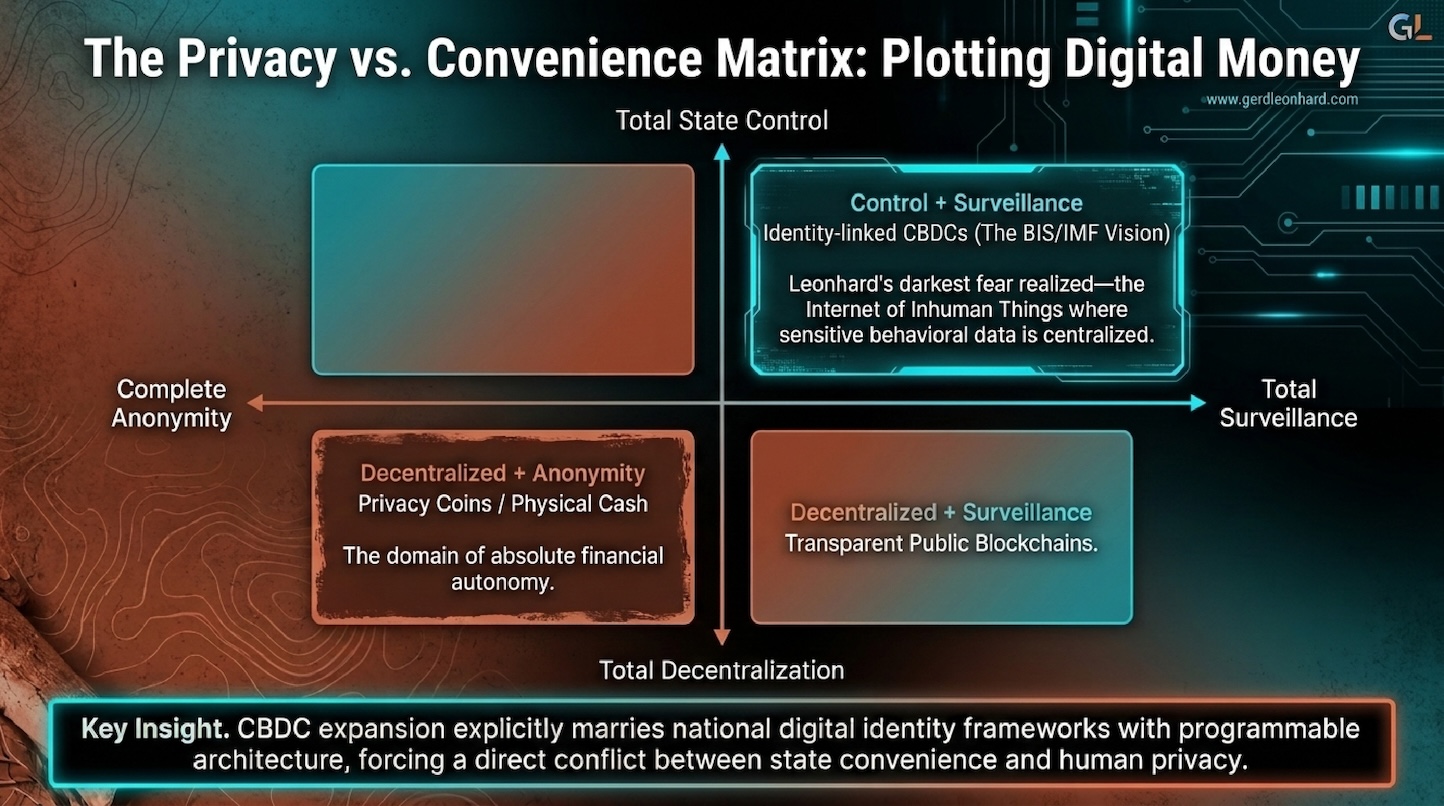
UNCLEAR — Cashless Societies & CBDCs
The 2016 Prediction: Cash would be completely obsolete and largely forbidden in favor of 100% digital money. The 2026 Reality: Mixed. Cash usage is at an all-time low, but it is not illegal. Instead, Central Bank Digital Currencies (CBDCs) have exploded, with 134+ countries (98% of global GDP) actively piloting or assessing state digital currencies, though they face massive political pushback over transaction privacy.
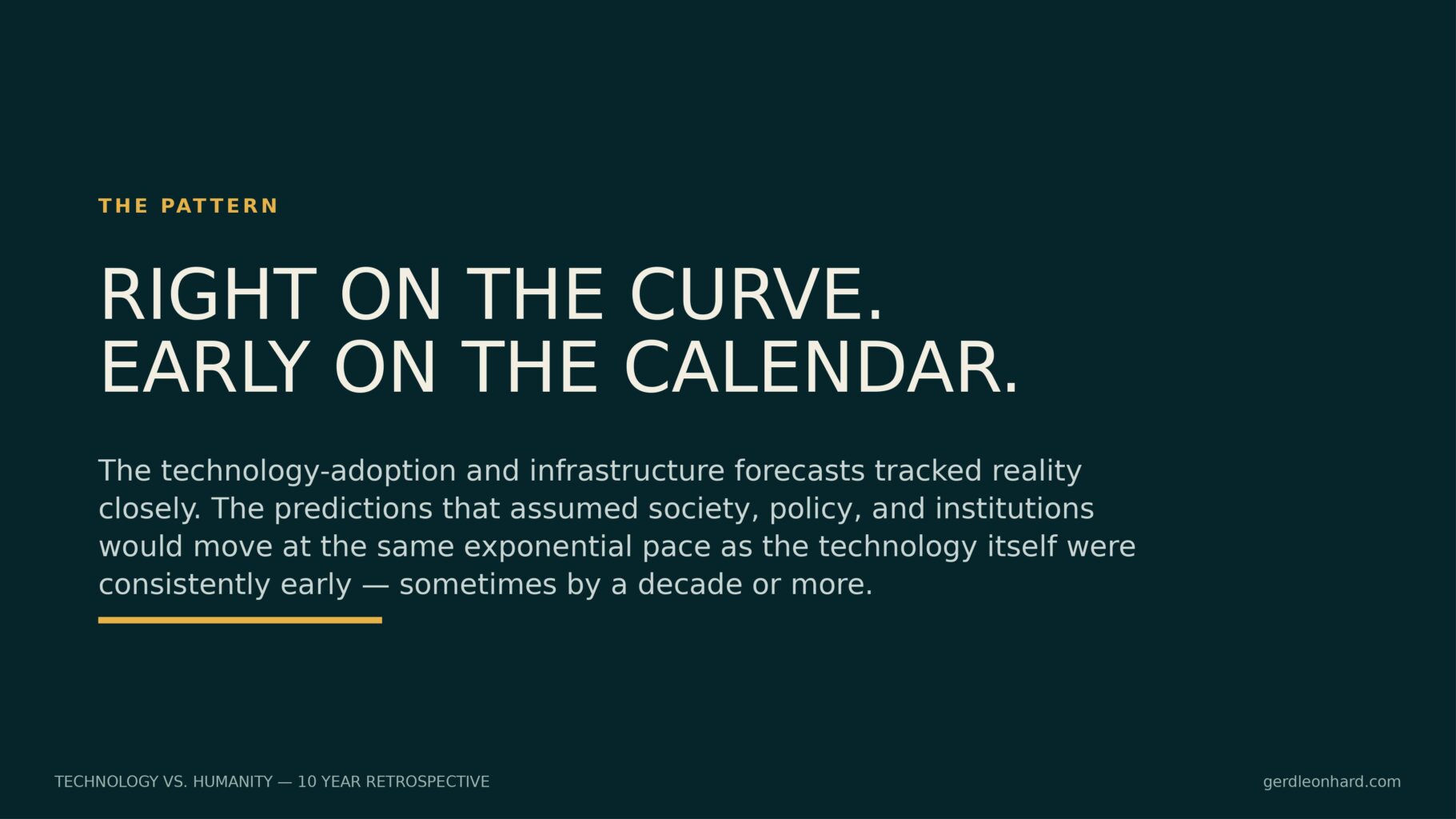
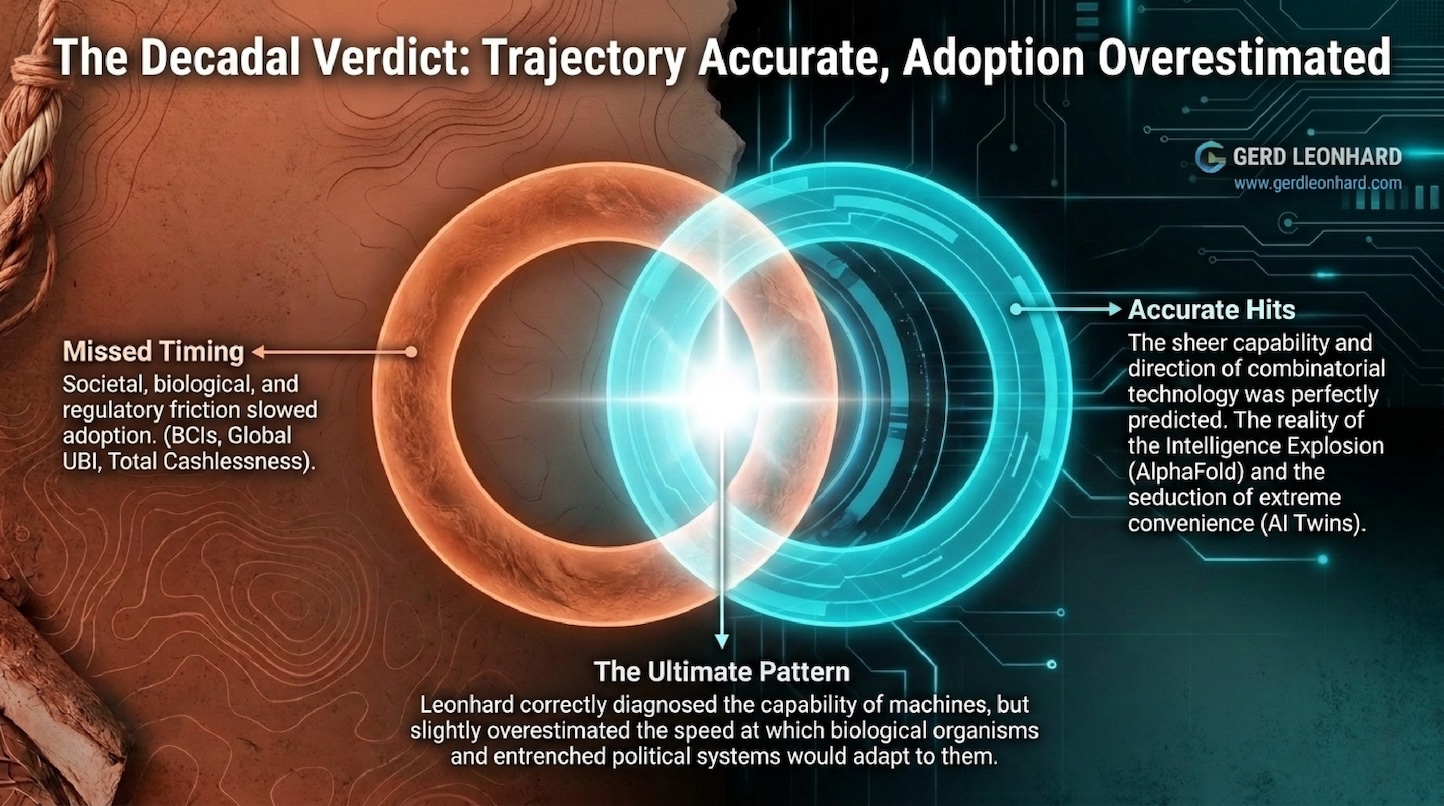
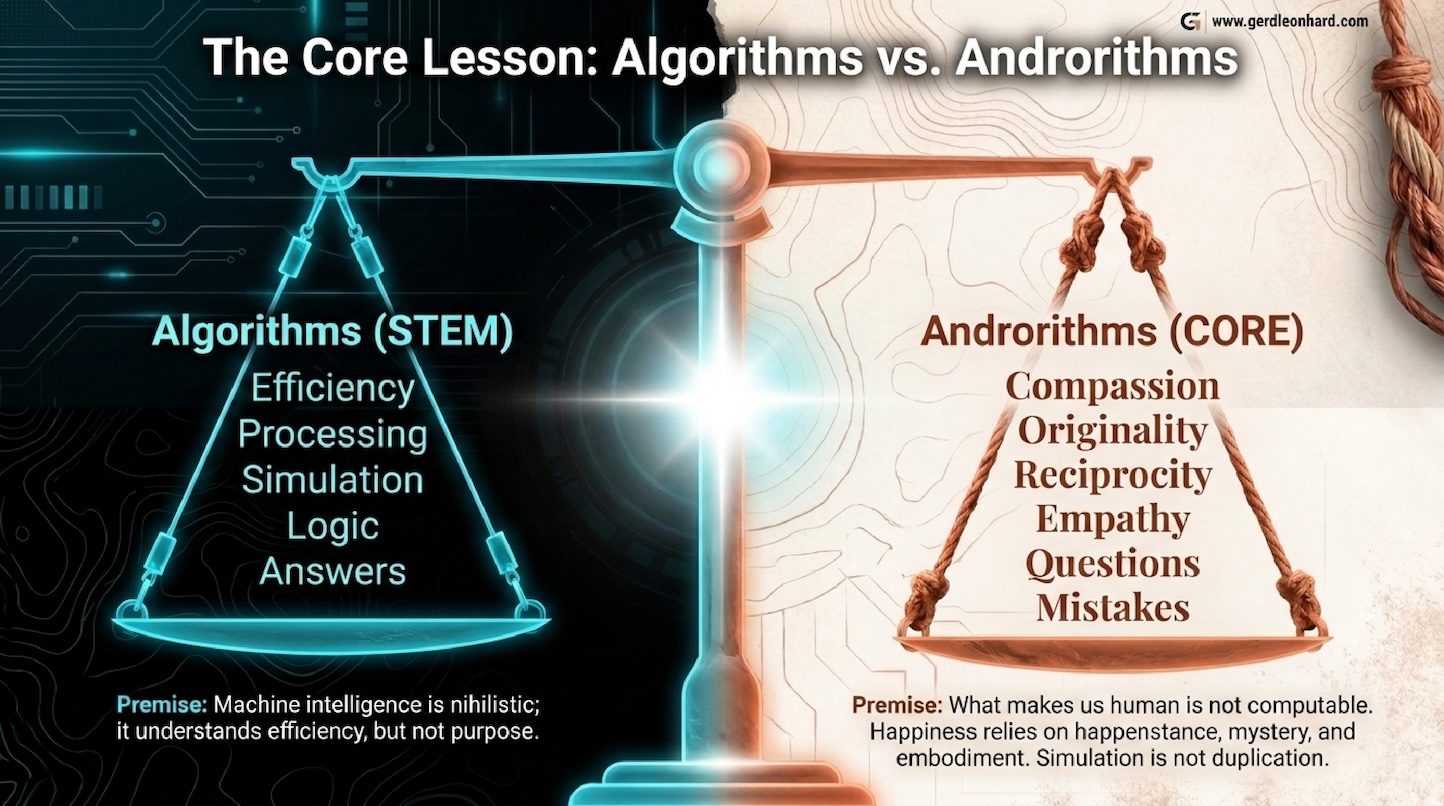
Conclusion — The Core Lessons: This mixed scorecard proves Gerd’s ultimate Chapter 12 thesis: technology is moving at exponential speed, but our ethical, social, and political frameworks (our androrithms) still move at slow, human speeds.